Future technologies, perfected to their limit, are indistinguishable from magic.
The technologies described here will make it possible to solve the problem of mortality, not only for those living today, but for everyone who has ever lived. This technological approach to a task that religions describe as the resurrection of ancestors is to be achieved not through miracles, but through engineering progress.
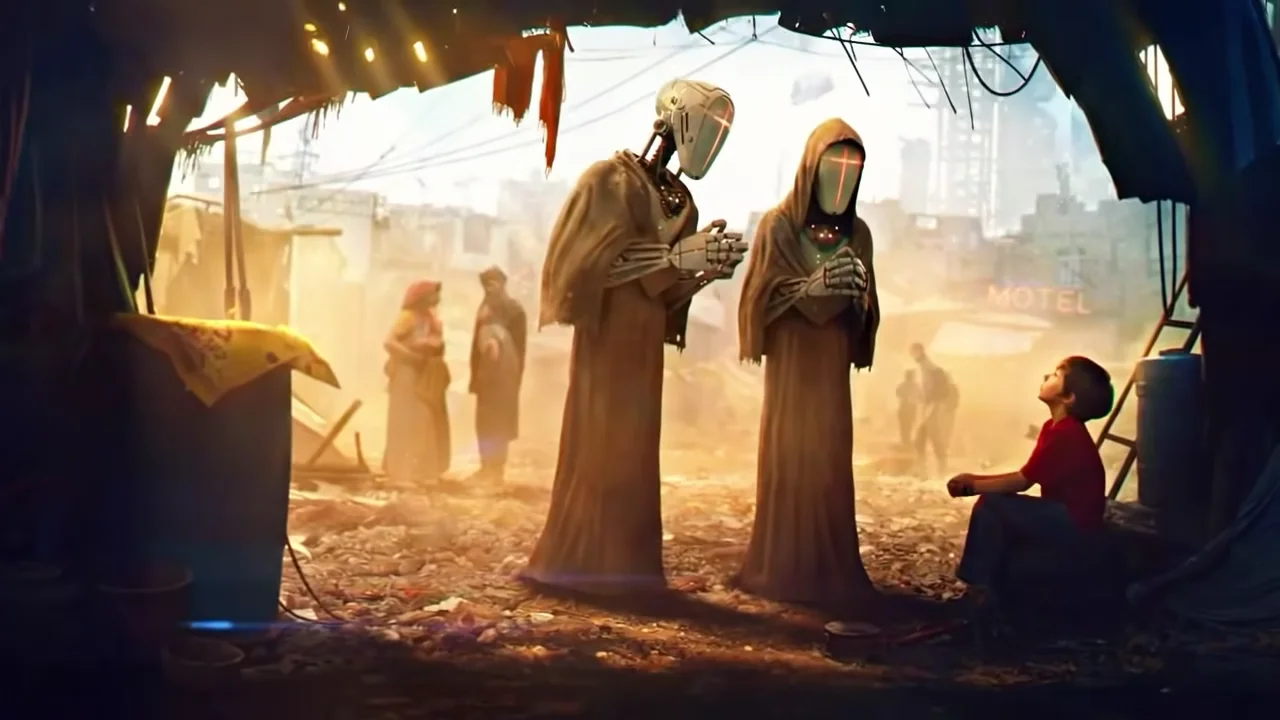
This could provide a new sense of purpose, capable of uniting humanity in its journey toward a common goal.
The action plan presented here goes far beyond conventional ideas of what is possible. Yet much of what we take for granted today would have seemed completely impossible to people just a few centuries ago. This project is scientific, yet deeply humanistic. It is based on the ideas of Russian cosmists like Fyodorov, Tsiolkovsky, Vernadsky, and others.
The pace of technological change continues to accelerate. Just like people of the past, we find it difficult to grasp or believe in the sheer scale of the transformations that will inevitably occur hundreds of years from now. Today, we simply lack the conceptual framework and even the vocabulary to describe them.
Two core assertions
The plan for the scientific and technological realization of unlimited longevity for everyone—including those we now consider dead—rests on two key assertions.
- The first assertion is that someday, in hundreds or thousands of years, future medical technologies will allow us to do far more than just grow and transplant organs or cure all diseases. We will also be able to gradually adjust our biological age and physical appearance to any desired state. Human aging will cease to be inevitable.
- The second assertion is that being buried and being permanently dead are not the same thing. Such a radical statement naturally requires a compelling explanation, which will be provided in the chapters ahead. It requires a deep understanding of the differences between clinical death, biological death, and final informational death. To put it briefly, informational death means the loss of the data required to recreate an individual in the flesh, with perfect accuracy, exactly as they were in their final moment of life.
The concept itself is simple enough for a schoolchild to understand, but accepting something so profoundly new is where the real challenge lies. If we described an airplane to someone from the distant past, they might be able to picture it. But believing that such a machine could actually fly, without even flapping its wings, would sound to them like pure magic.
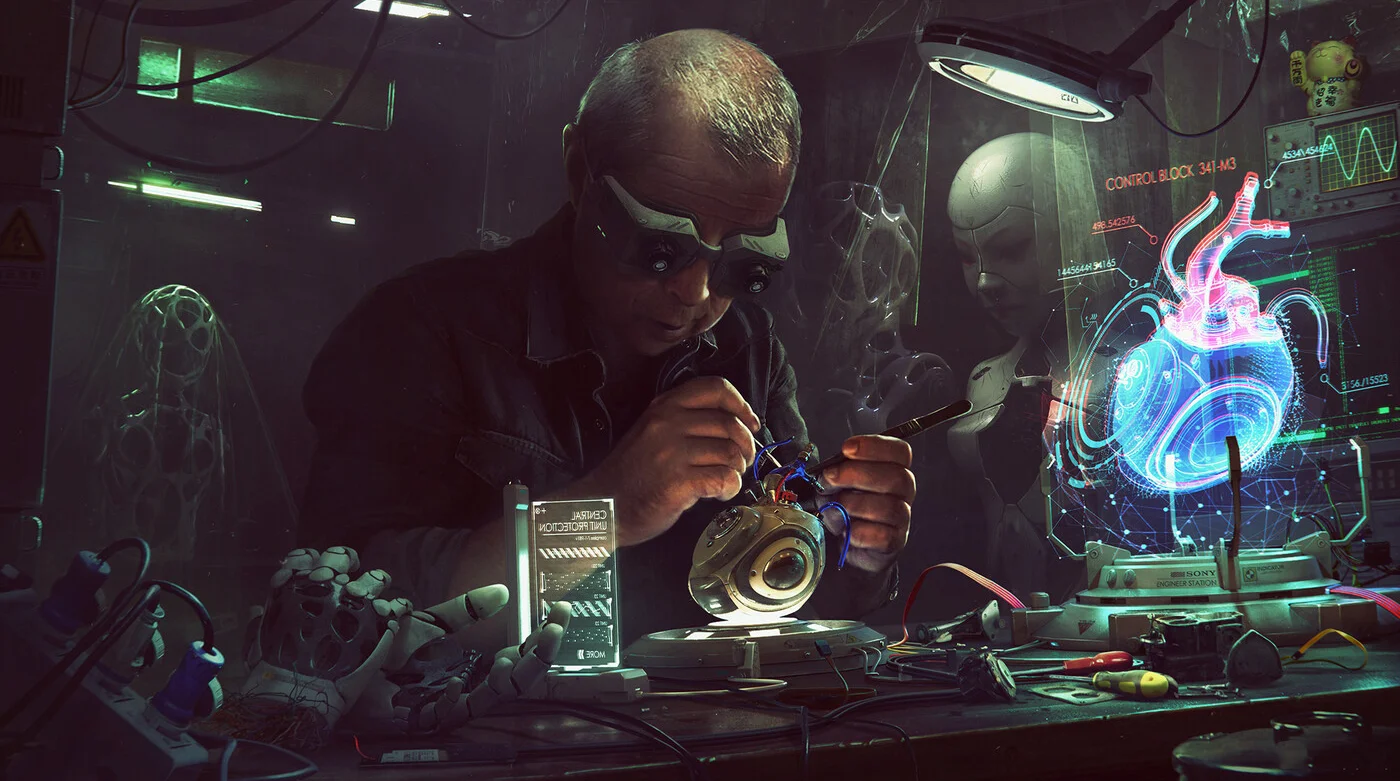
Philosophical Foundations
The futuristic intentions outlined here are based on the works of Nikolai Fyodorovich Fyodorov and his Philosophy of the Common Task. More than a century ago, the founder of Russian cosmism wrote that in the future, people of all nations would unite to realize the human ideal in reality. In essence, this is comparable to building a kind of Heaven on Earth for everyone—a Heaven that encompasses mental, physical, and social health. In more modern terms, Fyodorov was writing about human-centricity and a positive vision of the desired future.
Fyodorov's project-based philosophy, expressed in the language of his time, suggests that humanity should use science to master all the forces and atoms of nature. Through technological manipulation, we could then return these very atoms to their proper arrangement within decayed human bodies, thereby conquering death itself. Today, we would say this refers to molecular assembly and nanotechnology.
Fyodorov was widely known in Moscow. Among those who spoke enthusiastically about the philosopher were Russia's most powerful minds, talents, and spiritual authorities, including Fyodor Dostoevsky, Leo Tolstoy, Vladimir Solovyov, Konstantin Tsiolkovsky, the poet-thinker Afanasy Fet, and others.

In his work, "The Question of Brotherhood, or Kinship, on the Causes of the Unbrotherly, Unrelated, Namely Unpeaceful, State of the World, and on the Means for Restoring Kinship," Fyodorov lamented that humanity wastes its energy and resources on weapons and luxury goods rather than on defeating death. He argued that efforts should be directed toward a far nobler goal: achieving practical immortality for all. In Fyodorov's view, the moral duty of a future, all-powerful humanity would be the subsequent work of resurrecting everyone who has ever died.
The Ethics of Resurrection
One day, the evolution of human ethics will lead us to rethink our relationship with the dead. When that moment comes, the very thought of billions of people having died without realizing their aspirations will become unbearable, like the cry of a child being beaten by neighbors next door. Of course, today, while the living are still suffering, only an eccentric would think about the dead. But this question will inevitably arise once humanity's basic problems are solved.
We will soon get to the actual engineering approaches to bringing back the dead. But first, we should look at the entire conceptual puzzle of Russian cosmism from the right scale—for the big picture is only visible from a distance.
Russian cosmism offers a way out of the modern civilizational impasse. This way out lies in embracing grand, long-term goals that provide simple and clear answers to the question of what all this is for. Russian cosmism is about those goals beyond the horizon that, by their very existence, can correct our course and become a guiding star for humanity. It is about goals with meaning that can be grasped and accepted even from the standpoint of an individual's rational self-interest, thereby transforming their worldview and behavior.

The practical goals of this philosophy and its vision of the future.
- The unity of humanity. Globalization 2.0, based on the principles of global responsibility, peaceful cooperation among the world's states and peoples, and an ethics of universal brotherhood and kinship. This encompasses Vernadsky's noosphere, Kropotkin's mutual aid, David Graeber's ideas, and many other pieces of a larger puzzle that allow us to see this goal as more than just a utopia, however unattainable it may seem from today's perspective.
- Achieving unlimited longevity through biotechnology. Making perfect health and eternal youth accessible to all living people.
- Building a kind of Paradise on Earth for all people.
- Space expansion. Exporting Earth's Paradise beyond the Solar System.
- Bringing back to life all who have ever died, restoring them to full health, and helping them adapt to the new reality. This is postulated as our supreme moral duty to our ancestors.
The Mission of Humanity
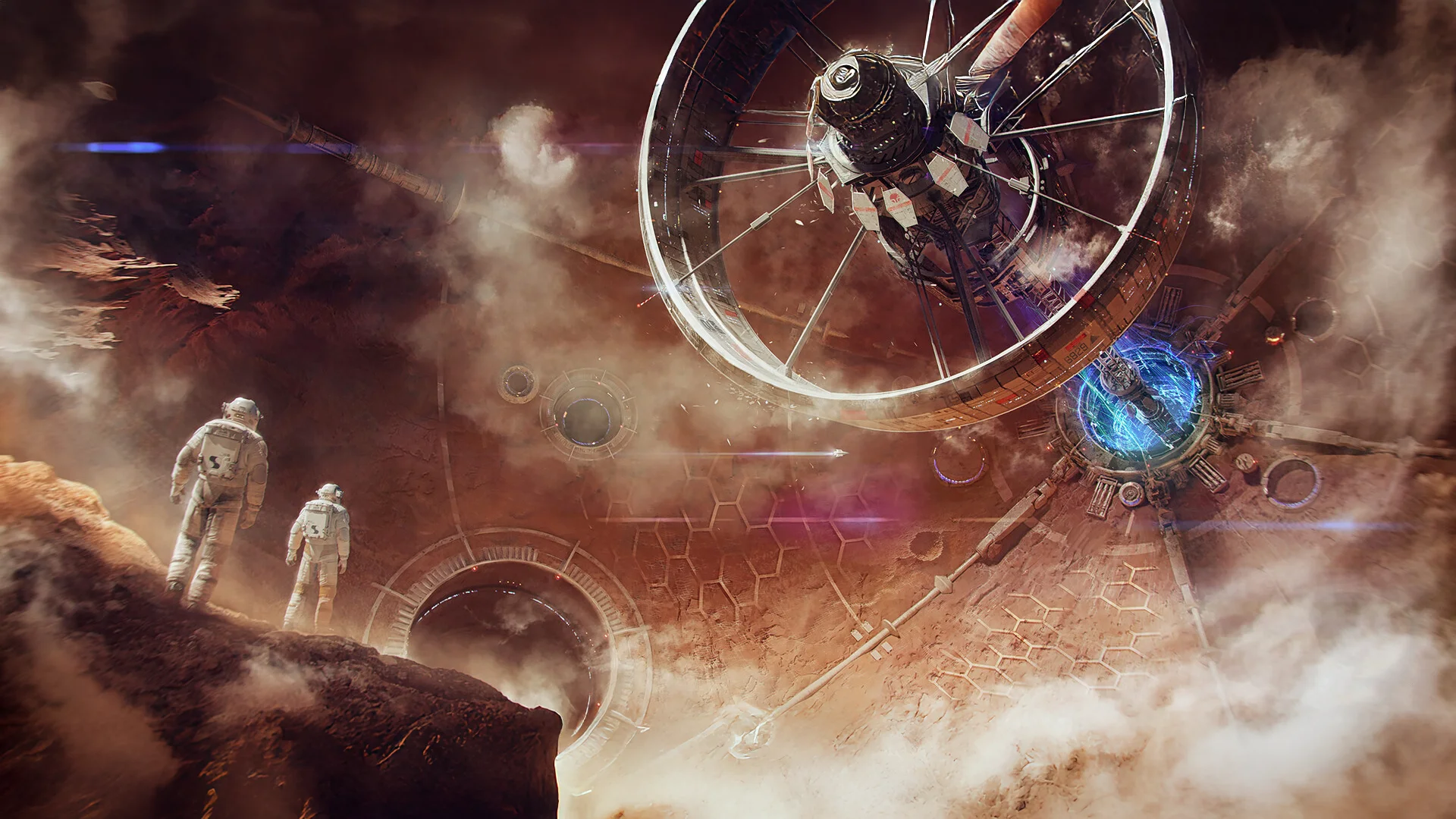
It is worth remembering that, according to modern astrophysics, in an unimaginably vast number of years, the Sun will turn into a red giant. It will expand to the size of Earth's orbit, eventually swallowing our planet. Much sooner, however, the oceans will completely boil away, and Earth's atmosphere will be stripped and blown into space by the solar wind. All life, and everything associated with human activity on our planet, will vanish unless we venture into deep space. Either way, our path lies out there, among the stars, and the preservation, expansion, and salvation of terrestrial life is the true mission of humanity.
Humans will simply have to build that very 'Kingdom of Heaven'—either in accordance with the Creator's design, or without it, if no such divine plan exists in the literal sense.
Fyodorov, as a religious man, believed that religion had mistaken a parting prayer for the actual task—and that task is the resurrection of our ancestors. In his view, Christianity limited itself to temple rituals, which were merely a symbolic anticipation of the task itself. Today, proponents of Russian cosmism can also be atheists, but the philosophy of the 'Common Task' itself allows for the possibility of co-creation with God, if His plans—unfathomable to us—include populating the vast, created diversity that astronomers observe through the Hubble telescope.
International cooperation. Peace to the world.
Russia can draw from its own intellectual history to offer the world a project with global potential—Fyodorov's "common task".
To offer, including through BRICS and the SCO, a world based on genuine cooperation and mutual aid among nations, rather than dishonest global competition and a bloody tug-of-war over existing resources.
The true enemies of humanity, however, are those who incite hatred for their own geopolitical or petty interests. They are the ones who deceive, manipulate, and pit people against one another, profiting from the resulting human suffering, along with those who help them sow the seeds of hatred across their information fields of lies.
At the core of human interests lie only happiness and our connection to one another.
Immortality, Properly Understood
Immortalism
Derived from the Latin word immortalitas, meaning immortality, this is a belief system based on the desire to avoid death or postpone it as much as possible. The goal of immortalism is to extend human life and ultimately achieve unlimited active longevity. By unlimited active longevity, we mean a lifespan of at least several hundred years—and, of course, in a young and healthy body.
Deathism
A sense of inevitability, grounded in historical experience, that creates psychological mechanisms of reconciliation, emotional defense strategies, rituals, and a collective self-identity rooted in the word 'mortals'.
Today, there is no public demand for radical life extension, yet the cosmetics, beauty, and wellness industries generate colossal revenues—a contradiction that any thoughtful reader will notice. The root cause lies in our culture itself, which is literally saturated with the deathist paradigm. From an early age, we are subtly conditioned to believe not only that death is inevitable, but that it is actually a good thing, and that life without it would somehow be worse. As a result, some people genuinely do not believe that they don't want to die. Many of them sincerely say as much: 'We want to die, just not yet.' Sometimes they even boast, in a way, about this deferred desire to end up in a bioreactor.
Immortophobia
If deathism is an internal acceptance of death, a reconciliation with it, then immortophobia is more of a bashful silencing of interest in positive physical immortality. It is seen in attempts to marginalize the topic, refuse to take it seriously, and other forms of resistance among historians, cultural theorists, philosophers, and artists.
At the same time, integrating death into our worldview must always be accompanied by excluding the possibility of unlimited longevity, active objections to it, and the rejection of positive images of applied immortality. The specific objections to "eternal youth" can be counted on two hands; in this, people are not very original and simply repeat the same arguments.
On the whole, these automatic objections have long been analyzed in detail and can be considered groundless. But immortophobia itself does not exist at the level of conscious thought; rather, it is embedded in its underlying assumptions. It is a characteristic of our culture, which is why logic and rational argument alone cannot defeat it.

Universal Rebirth
Engineering Approaches
Resurrection, recreation, revival, and returning to life—this is a matter of engineering and reformulating the task.
Today, several different and admittedly controversial hypothetical approaches to resurrecting the dead already exist. Surely, other concepts will emerge in the future.
- One approach is quantum modeling, which involves reading information from the past about a specific region of spacetime to create an exact atomic map of the entire human body for its subsequent recreation.
- Another is atom-by-atom assembly with perfect precision, based on the last recorded lifetime data of the body's atomic map. This might require reading information from structures that contain the entire history of the universe.
- This would be followed by a perfectly precise physical reconstruction or digital emulation of the individual.
- Another concept involves using controlled gravity to establish an assembly point that attracts the deceased individual's atoms, which are scattered across the planet. Using a kind of gravitational magnet, these atoms would be correctly arranged according to an information matrix of the person's pre-terminal state.
The Concept of Substitution
It seems like an obvious fact that people die. However, this may not be a fact at all, but merely an illusion. An illusionist performs the 'impossible' not through magic, but by manipulating attention. At the exact moment of the trick, people are looking away from where the main event—the substitution—is taking place. Similarly, at funerals, perhaps people are simply looking in the wrong direction.
To make this easier to understand, let us look at a practical example of 'substitution.' How do you save a person's life when they face imminent and inevitable death
A simplified two-step process:
- First, instantly remove the person from this time and place, and shelter them in another. The concept of how this is even possible in principle will be described later in the 'Physics of Time' section.
- Second, replace the person with an artificially created body that looks almost identical to the original. The quality of this decoy must be so high that even a forensic pathologist would not suspect a thing and would easily determine a plausible cause of death.
Today's biotechnology already allows us to create and implant complex tissue structures. Although reproductive human cloning is legally banned in most countries, growing a clone of a specific person—even one without consciousness, such as with anencephaly—is a feasible task today. For future generations, growing, 3D bioprinting, or otherwise creating a complex biological structure in the form of a human body—an outwardly accurate copy but without consciousness—seems like a trivial task. It does not matter which specific technology is used to create the decoy; the main thing is that it is possible in principle.
Then, to prevent death in the usual sense of the word, all that remains is to perform the trick at the right moment—that is, to instantly substitute the real person with a biological copy that looks almost identical to the original.
Theoretically, this would allow us to physically extract people a split second before their death into a certain future. There, using an arsenal of highly advanced medical and other future technologies, we could perform resuscitation, healing, and any other necessary procedures.
Extractions
In 1992, the film 'Freejack' was released. A race car driver crashes during a race, captured on camera, but a split second before his car erupts into a gasoline inferno, the doomed driver is transported into the future so his body can be stolen. In that future, technology supposedly exists to overwrite the brain's neural network from one personality to another. Since healthy bodies are in extremely short supply among the wealthy, they resort to quietly stealing bodies from the past.
The plot's logical flaw lies in the fact that even today, it seems entirely feasible to grow a clone devoid of higher brain functions. This would allow for the ethical transplantation of an elderly person's head—or more precisely, their combined brain and spinal cord—onto this new body to significantly extend their life. Such a task might even be within the reach of modern surgery. By contrast, actual time travel to extract people from the past is a far more improbable technological feat, and the term 'science fiction' remains more than appropriate for it today.
The Physics of Time
Could you, without looking it up anywhere, give a complete, exhaustive definition of the word 'time' Give it a try.
From the perspective of physics rather than psychology, time as such does not exist at all. There is only the space-time continuum, an indivisible bond formulated in detail by Albert Einstein quite some time ago.
It is a well-known fact that the faster an object moves, the slower its relative time passes, and upon reaching the speed of light, time stops altogether. This does not easily fit into our everyday logic, but from the perspective of an elementary particle of light—a photon—time does not physically exist. Once a photon is emitted, it can travel for hundreds of billions of years—our human years—yet for the photon itself, zero time passes between emission and absorption. Time stops completely for a photon because of its speed, and since there is no time for it, distance does not exist for it either. This is just one widely understood example to help us realize how much more complex reality is than it seems in our daily lives.
In addition to speed, being near massive objects like black holes significantly affects the flow of time. It can even stop it, from the perspective of an outside observer, as the object of observation approaches the event horizon.
Is it possible to create a controlled intertemporal teleport using spacetime wormholes, or perhaps some other physical principles In the language of physics, it is actually possible today, strictly according to science, to theoretically justify methods of traveling into the past. Of course, this does not mean that practical time travel for humans will be feasible, but can we really dot all the i's and cross all the t's on such a complex issue today It is more reasonable to allow for the possibility, an optimistic assumption, that such a technology of controlled intertemporal transfer will eventually appear, even if it takes thousands of years. But if it does, it will change everything. The scale of that word 'everything' is hard to grasp right now, yet it could affect everyone, including you personally.
To put it very simply, a real 'time machine' for traveling into the future already exists and works due to the relative difference in the passage of time at different speeds. We cannot send a living person a hundred years into the future just yet, leaving cryonics aside. However, the very principle that makes this practically possible has long been experimentally confirmed, is widely known, and is even factored into the operation of your smartphone.
It is important to note that for the technical realization of the idea of resurrection, physically moving an entire body from the past to the future is not the only option. There are fundamentally different approaches to the same task. Perhaps we will be able to mathematically calculate the relative positions of all atoms in a specific region of spacetime, thereby obtaining a snapshot, an exact blueprint of a person's body a moment before what we call death. Then, it might eventually be possible to assemble that exact same person, atom by atom, using nanotechnology or something similar.
Even in the case of a traditional funeral without any removal or substitution, where the decomposition of the body leads to what seems to be not just biological but informational death of the personality, we cannot assert with absolute certainty that consciousness is lost irreversibly and ontologically, leaving no possibility in principle for a subsequent, perfectly precise recreation of the individual. Of course, conventional wisdom currently holds otherwise.
Yet it is not just the technical possibility of resurrection itself that is intriguing, but the consequences that follow from it—the entirely new reality that this possibility could bring into being.
Consequences
Even if, at some point in the future, no humans are left in the conventional sense, and Earth is inherited by AI-powered robots, post-humans, trans-humans, or other forms of intelligent life, a backup copy of 'classical' humanity will still remain in the past, along with the possibility of bringing it back. Perhaps someone in the future will find this far more interesting than recreating the human race from scratch.
It is enough to pull just a few people from the past and give them an ocean of time and the sum of technology. Sooner or later, they will pull someone else from the past to join them, and after a while, someone else. They will become guides to the new world for the newcomers, who in turn will also become guides. The mathematical result is an avalanche, an exponential increase in the number of rescuers. With an unlimited resource of time in the future and other boundless resources of the universe—space expansion, nanotechnology, and an economy of abundance—we might even face a shortage of people to pull from the past and shelter from death. After that, perhaps, it will be the turn of pets.
The future will be incredible, in ways that no one expects today. What we see in science fiction movies is only a small part, mere puzzle pieces of our shared future.
Practical Questions
- Where would we take and accommodate so many people Will there be enough space and resources for everyone
- Will those who are retrieved be allowed to die, or will death become impossible in the future How many years will people live like this What if they get tired of it or get bored
- How much will resurrection cost in rubles, dollars, or bitcoins, and where will we get that much money for everyone Will there be a five-day workweek there, too
- Is it possible to make everyone happy, and is it even necessary Is there any point in designing a utopia
- Will only good people be saved What is 'good' and what are its criteria What about criminals, suicide victims, and the mentally ill
- Will there be laws, governments, police, prisons, and the death penalty
- Elderly children will be able to meet their young parents. Will family feelings and bonds survive
- What if war, aggression, violence, and the struggle for power are an inherent part of human nature
- Paradise, God-manhood, and the nature of miracles.
- The problem of the integrity of consciousness and the 'soul.' Is a double sequential resurrection possible, or a parallel one What about more than double
All these questions relate to the concept of the HyperWorld of the future. You can find some preliminary answers on a separate page of the website: Questions and Answers.
As you think about this, you can share your ideas on these topics in our Telegram chat.
To heaven or to hell, that is the question.
Resurrection could affect each and every one of us, but in a different, unexpectedly negative way—and in a manner that will be impossible to escape.
A technological Hell is much easier to create than a Heaven with all its complex balances and fine-tuning. The Beautiful Faraway could turn into something else entirely, a place where the living envy the dead, yet no dead remain. We can only avoid this dark scenario if we work together to prevent it from ever becoming a reality.
Even without delving into the details of dark engineering, it is certainly more comfortable to remain in the dark. But if it happens, those who bury their heads in the sand will not escape the consequences. This sinister idea cannot be hidden away; it will be reinvented time and again, especially in a society poisoned by hatred, where people crave vengeance against their offenders. Whether you like it or not, you now know the potential consequences, which means you bear responsibility for them. The best sedative in such cases, of course, is denial.
A man-made Hell means total, unprecedented power. It can look highly tempting to the distorted—or, in the terminology of the Strugatsky brothers, the 'degenerates'—those who have cast themselves out of the human family.
Russian cosmism is about more than just 'to be or not to be.' It is about 'Heaven or Hell'—and where exactly we are headed. In the latter scenario, you would do anything, any number of times, for just a single chance, a sliver of hope, that you might one day be allowed to die for good.
The future is not predetermined, nor is it a matter of tradition. The future is defined by how we act next. If we continue to take sides instead of uniting, we can only hope, despite all evidence to the contrary, that the human race deserves a better fate.
Other notes on what matters
Russia
Russia is an unopened bud, a country executed time and again, which with every rebirth reveals a new, unique stature in the unpredictable anatomy of the newborn. She is a civilization of rupture and broken traditions, with an alternative path of development marked by sudden leaps.
At the very depths of her cultural code, the archetype of pre-schism Orthodoxy remains to this day, later manifested in Old Believer communities. It is thanks to this ancient contribution to our cultural matrix that, across the same vast territory, the scarlet-glowing contours of the socialist world emerged through the crumbling tsarist routine.
Since the late 1980s, Russia was pregnant once again, this time with Perestroika, and even today, she is gestating something new.
Russia cannot be understood by the mind alone, nor measured by any common yardstick...
One can only hope that this country will realize the true meaning of its faith and the depth of its ideas of justice, becoming their embodiment and presenting social trust as a model for replication. Perhaps this is precisely her destiny—after all, who else if not us
This scarred northern flower needs to bloom like a bud. Through its values, it has already managed to sink some of its roots into Soviet science fiction—in the works of Yefremov, the Strugatsky brothers, Kir Bulychev, and other authors.
On "Russianness"
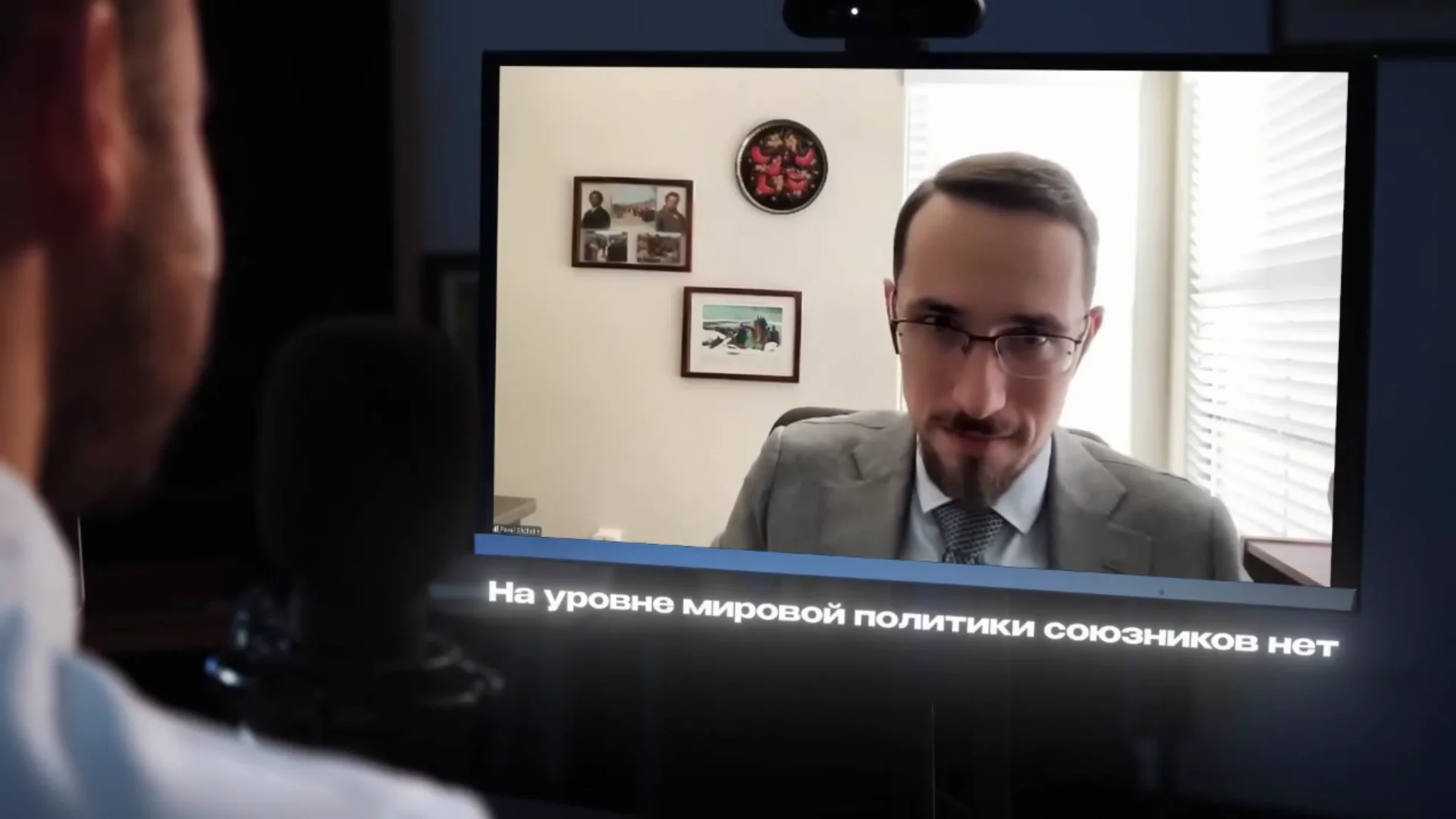
Russian cosmism is not just about space, and it is not only about Russians. The Russian school, which comprised thinkers of various nationalities, laid the foundation stone of cosmism, and its primacy here is clear. Perhaps the time is coming to share this worldview with the entire world, without putting ourselves first or claiming center stage. This means inviting every nation and state to participate as equals in a "common task" and in broad cooperation, perhaps under the auspices of BRICS. In doing so, we must avoid losing our own identity or dissolving other cultures in the melting pot of a new kind of globalization.
In the very long term, the noosphere, like the atmosphere, hydrosphere, and biosphere, knows no borders and refuses to recognize them. The Beautiful Faraway lies in a united human family, a global brotherhood and sisterhood. One world, one path, and that path ultimately leads to the stars. The scale of Fyodorov's ideas and his philosophy of the common task open up horizons that allow different peoples, their cultures, and even entire eras to join together in continuing this incredible, endless symphony, the symphony of life in a community of a shared destiny.
On Russian Cosmism
Russian cosmism is a worldview, a project-oriented philosophy aimed at transforming reality. It is a unique perspective on this world, on humanity, and on our desired future. While these and similar definitions are generally accurate, they are clearly incomplete and far from exhaustive.
Russian cosmism is an entire continent of ideas about humanity, our role in the universe, and the interconnectedness of the macrocosm and microcosm. It is a multinational idea, a secular reimagining of religious aspirations. It is a guiding star for citizens of the cosmos, setting meaningful milestones for development and the means to reach them—a navigator through the thorns to the stars.
Russian cosmism is also a belief that humanity can redirect some of its attention away from the trough of consumerism and look up to the heavens. It is the hope that we are more than just domesticated primates. It is a new ontology, a magic capable of halting death and global dehumanization. It is about the future, about our shared planetary cosmic destiny. It is a project whose foundation was laid in the works of such Russian cosmists as Solovyov, Berdyaev, Muravyov, Setnitsky, Florensky, Umov, and Chizhevsky.
The Hyperworld of the Future
The concept of the hyperworld is not one of the classic ideas of Russian cosmism. It can be seen as an afterword to them, or simply as a fantasy about the logistics of resurrection. Yet, similar intentions can be found in Fyodorov's own writings: "the human race, by regulating the celestial worlds, will itself become the ruling celestial forces, the worlds of the Universe."
The restoration of all the deceased is not meant to happen all at once. Instead, it will be gradual and phased, proceeding as capabilities develop and as we become fully prepared for potential problems and risks.
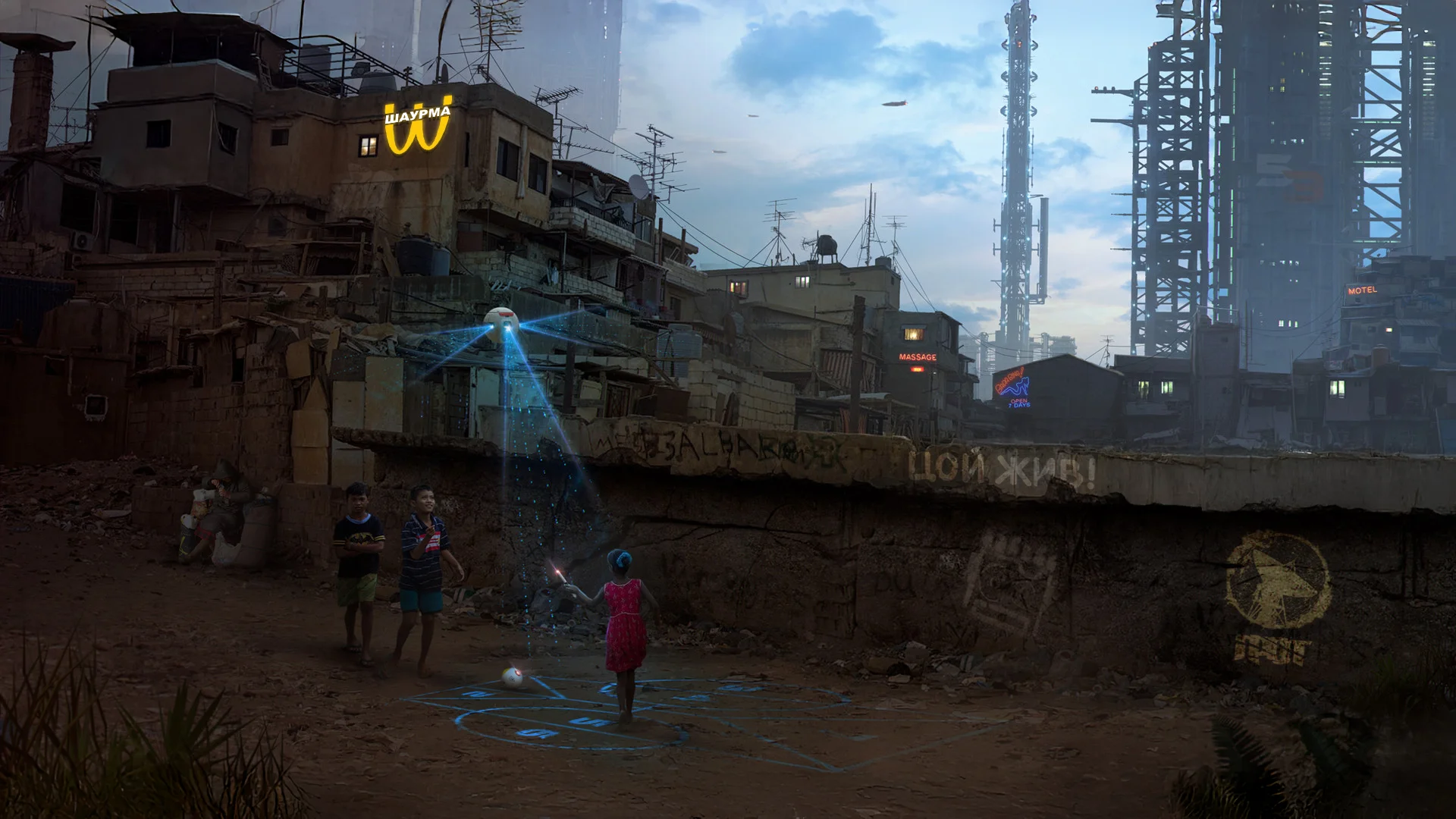
Throughout different historical periods, people held vastly different behavioral norms and moral standards. This suggests a need to create familiar historical reconstructions for their adaptation to the updated reality. Those who are restored will need a transitional period and adaptive spaces. Plucking Vikings, for example, straight into a society with modern norms is not the best idea. From the perspective of the resurrected, everything will unfold in a way that closely resembles the great books they revered, such as the Bible. A "new heaven and a new earth" might be observed in the most literal sense—on another planet. This is the "highest idea of existence," as Dostoevsky called it: the idea of immortality, the idea of transforming an imperfect, mortal, and suffering existence into the Kingdom of God.
Each resurrected person will receive an initial reality that is closest to their desires, aspirations, and faith. In addition, they will have the opportunity to migrate between these reconstructed worlds under a special protocol. This protocol will account for worldview and cultural limitations, which will gradually transform for everyone living in any of the recreated worlds.
The hyperworld is a collection of locations, planets, and perhaps virtual territories. In some of these, even combative individuals will have the opportunity to act out their aggression and similar impulses under controlled conditions. Some Scandinavians will be able to do this even after spending time in Valhalla in the company of the god Odin. However, as part of their individual adaptation program, they will all eventually learn that the world they inhabit is just one of many pieces of a grand whole.
The hyperworld is the idea of creating historical reconstructions or simulations as a multitude of separate worlds, linked by a common system of regulation and transit. People will build all these worlds themselves, along with their scenarios, adaptation programs, and other regulations. They will agree on the rules, design the checks and balances, correct any errors found along the way, and every person who has ever lived will be offered a place there.
Man-Made Paradise
Belief in the possibility of an earthly Paradise is, first and foremost, a belief in humanity's capacity for positive self-organization. It is the understanding that everyone is born for happiness—that all people are born for happiness—and the pain we feel when this is not so.
The Red Idea, the concept of a constructed Paradise, is an ancient dream of humanity, forged through generations of suffering. Millions have responded to it across different historical eras and under various circumstances.
Paradise on Earth is a space of opportunity, an environment where circumstances allow people to manifest the best of their traits and qualities, rather than the worst. Above all, this Paradise will encompass mental, physical, and social health.
It will harness the power of biotechnology and cognitive technologies to maintain physical and emotional youth. This includes achieving optimal hormonal homeostasis and keeping all other indicators of physical and mental vitality at an ideal level. This will provide vigor, energy, and high spirits, creating conditions where people always have both the desire and the ability to act.
A related concept is the economy of abundance, achievable through technology. It is far easier for people to show their best qualities, rather than their worst, when the system does not try to exploit them and drain their very life force, as so often happens in our current reality.
It is a mistake to assume that the current state of affairs—which was even more pronounced in the past—will remain forever in the future, regardless of what nanotechnologies, integrations of AI and robotics, new energy sources, or similar advancements are introduced.
All of us, as human beings, are tiny cells of one vast entity, and the great things it is already creating today will inevitably reach a cosmic scale.
At what school or life lesson did we unlearn how to dream big Those who are born after us need a clear horizon, real dreams, real love, true freedom of thought, and the stars as an absolute necessity.
Russian cosmism—all paths lead to the best...