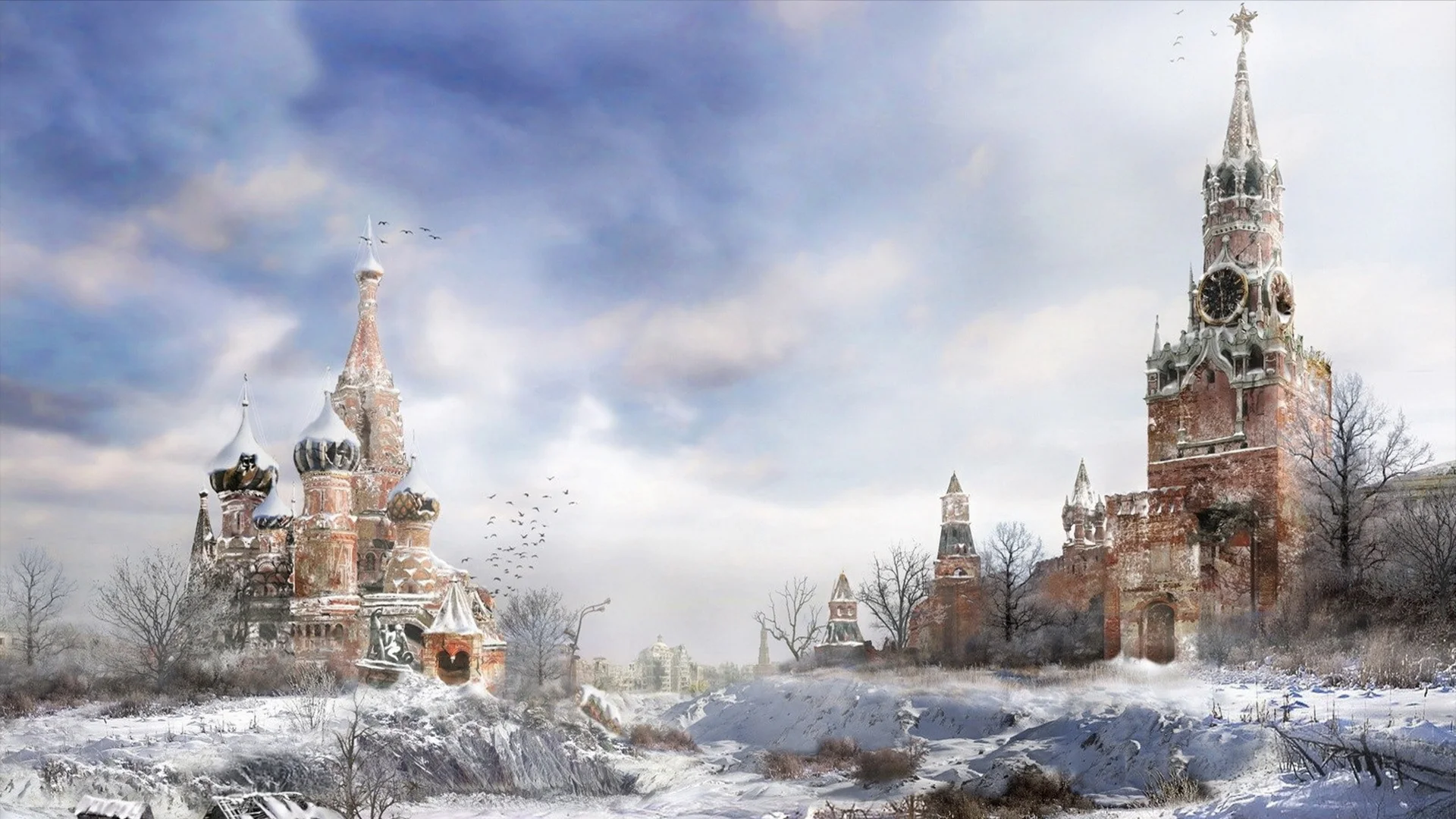
Questions and Answers about the Hyperworld
To look into the future, we must shift our focus, directing our gaze not at the petty whims of today's sovereign geopolitical players, but toward eternity. Every human being ever born will receive practically everything they desire, in any amount and for any length of time. Moreover, everyone will attain far more than they can even imagine or wish for today.
Overpopulation: real problems and potential solutions
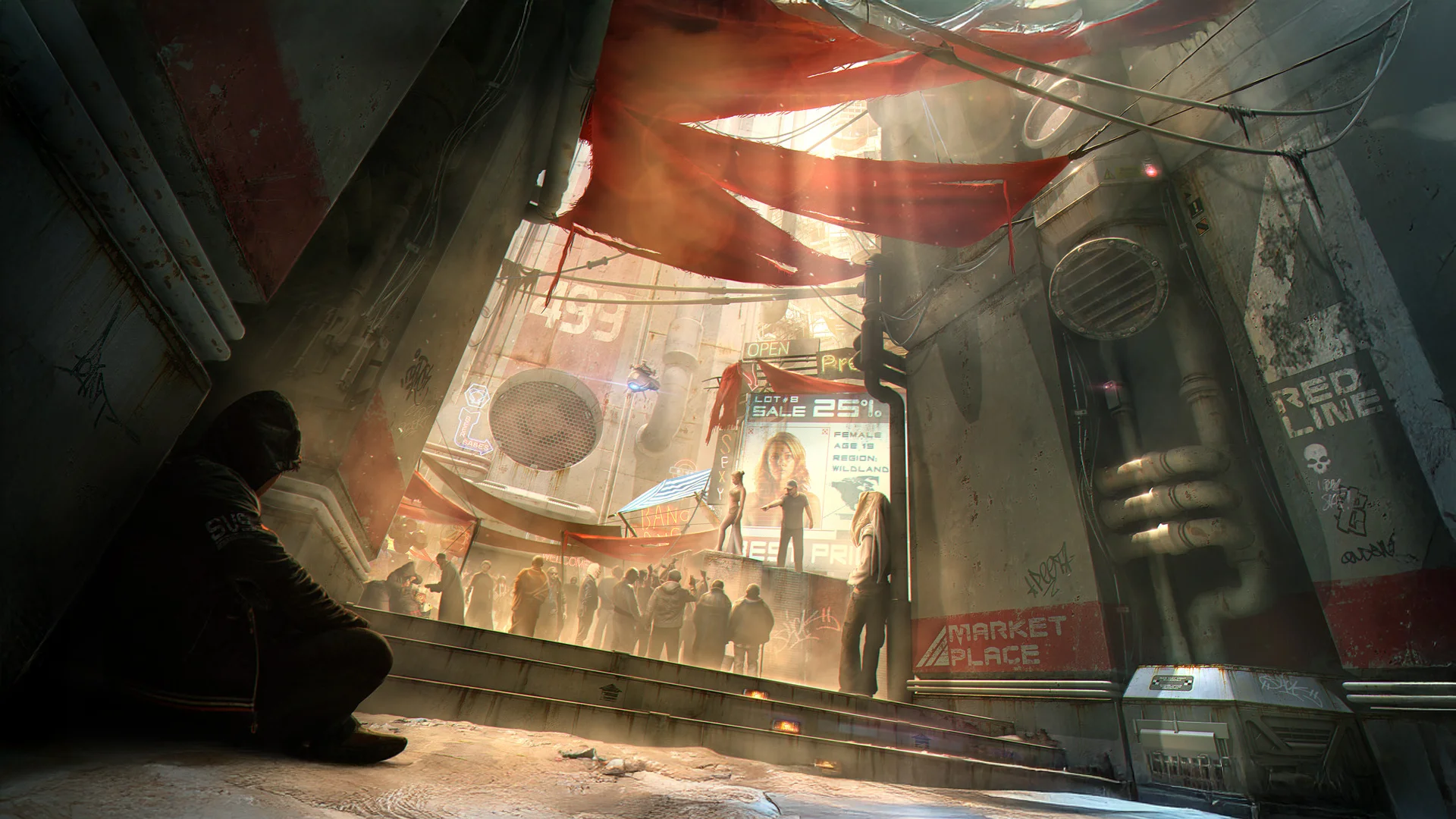
Throughout human history, approximately one hundred billion people have lived on our planet. This number helps put things into perspective: the nations, tribes, and cities of the past were tiny compared to those of today. Yet even now, with a population of eight billion, the Earth is far from being physically overcrowded.
Contrary to popular belief, the problem of overpopulation is not about a lack of land. There are vast, sparsely populated territories and coastlines with climates far more hospitable than, say, the United Arab Emirates—a country thriving in the desert. In China, the population density is actually two and a half times lower than in England.
Abundance and hunger
By some estimates, global agriculture, even with today's technology, has the potential to feed up to forty billion people. Yet, according to estimates from the United Nations and the World Health Organization, between twelve and twenty thousand people die every day from hunger and related diseases, far from the clamor of mainstream propaganda. About half of them are children under five. The depth of the platform is much greater than it might seem to those living on the upper tiers.
In a world where far more money is spent on pet food than on saving those dying of hunger, its values and priorities are obvious. Most of the children we fail to protect do not die in military conflicts. Instead, they perish because of the very logic of the global capitalist system, which quietly disposes of population surpluses unwanted by the economy, far from the TV cameras. Today it is their turn to be consumed; later, this same inhuman logic will reach everyone else.
The true nature of the problem
Many modern problems are managerial rather than technological. They are indeed complex. It is not enough to simply send a hundred Boeings or cargo ships filled with barley to Africa to stop people from starving. The problem is far deeper and more systemic.
Developed countries continue to plunder the periphery, while the most dominant nation successfully engages in unequal exchange with other developed ones. All of this remains the foundation, the basic principle of the modern world order, and it is directly related to the current problems of overpopulation.
The multifaceted impact on the environment
Pollution, the depletion of natural resources, the energy crisis, overcrowding, and poverty—this is what people actually mean when they discuss overpopulation, not a lack of physical space itself.
The planet's technological carrying capacity
The number of people planet Earth can support at a decent standard of living, without causing critical harm to the environment, directly depends on our civilization's level of technological development.
History clearly demonstrates this connection. New technologies—from simple improvements in land reclamation and agronomy to modern breakthroughs in genetic modification—continue to increase food production. Each technological leap expands the planet's carrying capacity.
The environmental problems we see today are largely the result of using transitional, imperfect technologies. The outdated industries of the past polluted the environment orders of magnitude more than modern closed-loop production facilities.
The Nanotechnology Revolution
Once humanity masters molecular nanotechnology in its mature form, there will be a qualitative leap in solving all resource problems. This technology will make it possible to:
Produce virtually any goods cleanly, efficiently, and at a minimal cost approaching zero;
Eliminate the accumulated environmental damage caused by the primitive production methods of previous eras;
Recycle waste at the atomic level, turning it into useful resources;
Create closed-loop production cycles where the very concept of "waste" disappears entirely.
This is precisely where humanity should focus its primary scientific efforts. It is one of the most promising and, at the same time, achievable technological breakthroughs in the foreseeable future—a low-hanging fruit on the tree of progress.
The Cosmic Perspective
Nanotechnology will also make space colonization economically viable. And here, it is crucial to realize the true scale of the resources available to humanity.
By cosmic standards, Earth is an insignificant, tiny grain of sand in an ocean of matter and energy. Every second, space naturally wastes an amount of resources billions of times greater than everything the human species has used throughout its entire history.
One would need an extremely limited imagination not to envision a more constructive use for all this matter and energy.
The right to choose
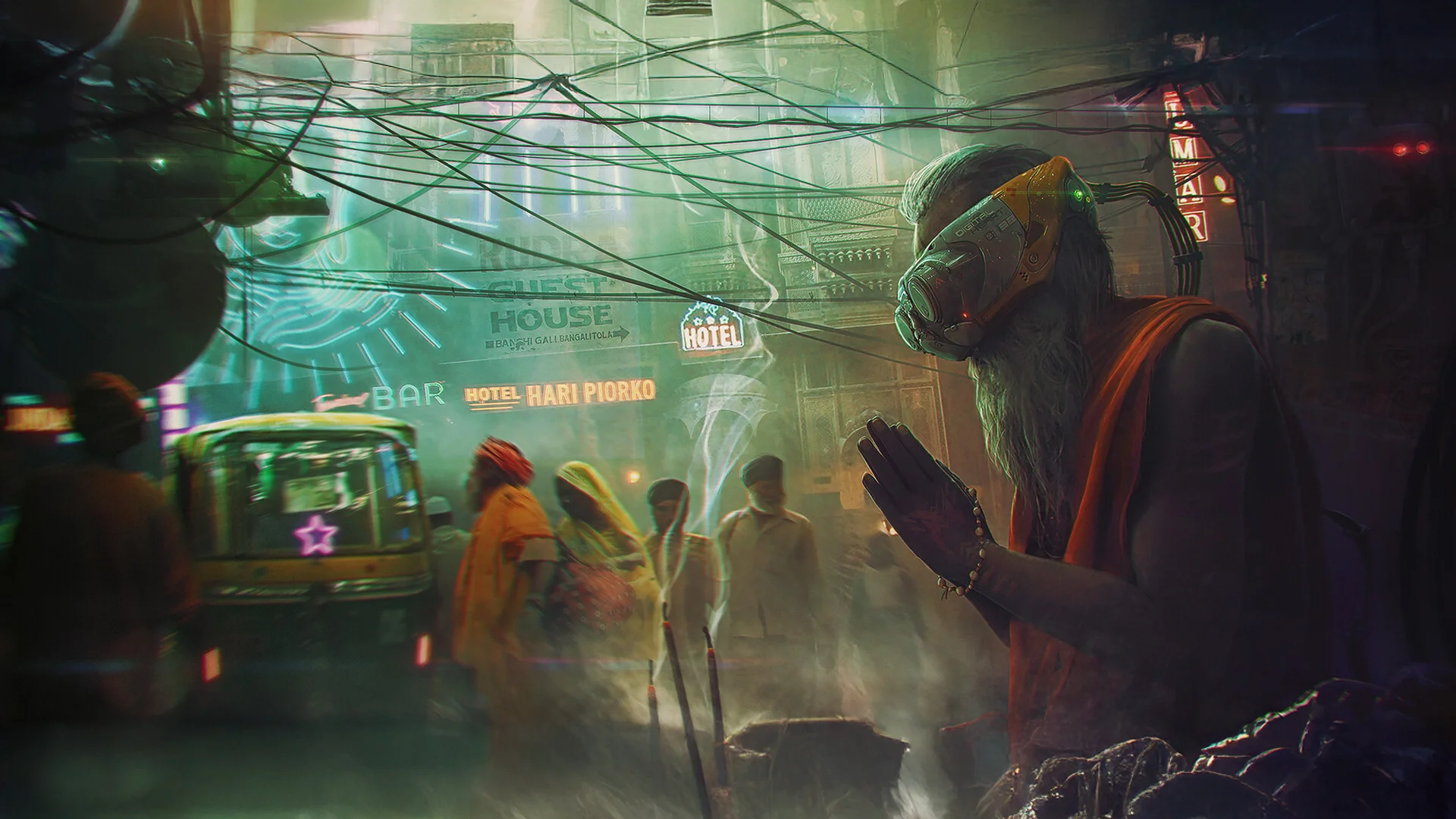
If, say, after thousands of years of life, a person wants to end their journey, what is so bad about that
The real evil is when a person's life is cut short against their will: by sudden catastrophe, incurable illness, violence, or old age. These are the causes of death that the philosophy of cosmism opposes.
Uncharted horizons of existence
It is entirely possible that, in the end, no one will ever want to die. Life itself, and everything it can encompass, will surely be enhanced by hitherto uncharted, unimaginable possibilities—qualitatively elevating what we today call living and existing.
Smartphones, television, YouTube, and video games would have seemed astonishing and unimaginable to someone living just a century ago. Surely, the hyperworld of the future will bring just as many new and unthinkable wonders.
In all likelihood, people will be able to live out entire scripted lifetimes as active participants in different historical eras, fully immersed in the fabric of events. It might even be possible to experience a form of reincarnation, while fully retaining one's personal memory of the past.
The biochemistry of states
Here, we must address a fundamental point that is often overlooked in discussions about immortality. Weariness of life, apathy, and a loss of interest in existence are ultimately matters of biochemistry, not the inevitable consequences of accumulated knowledge and experience.
Modern antidepressants and psychotherapy are practically Stone Age technologies compared to how we might potentially regulate human internal homeostasis.
We are approaching the threshold of an era when our mental and physical inner balance can be regulated and fine-tuned to an optimal state.
This does not mean forced happiness or a "chemical paradise." Rather, it is about the ability to maintain a naturally optimal state of mind for a fulfilling life—preserving clarity of perception, emotional depth, creative energy, and the capacity for wonder and joy.
The nature of pioneers
A radical increase in life expectancy means stepping into uncharted territory, where we will inevitably encounter unpredictable and perhaps even dangerous effects.
Throughout history, some people have always strived to push boundaries and explore new frontiers. They crossed vast oceans, ventured into space, climbed Mount Everest, explored the depths of the Mariana Trench, and achieved incredible athletic feats. These are all different ways of reaching beyond and transcending the limits of the possible.
Extending life beyond its traditional limits is a similarly natural expression of human nature and our inherent drive to transcend boundaries. It will inevitably happen, one way or another. It is, if you will, our destiny as a species.
Stages of the Great Transition
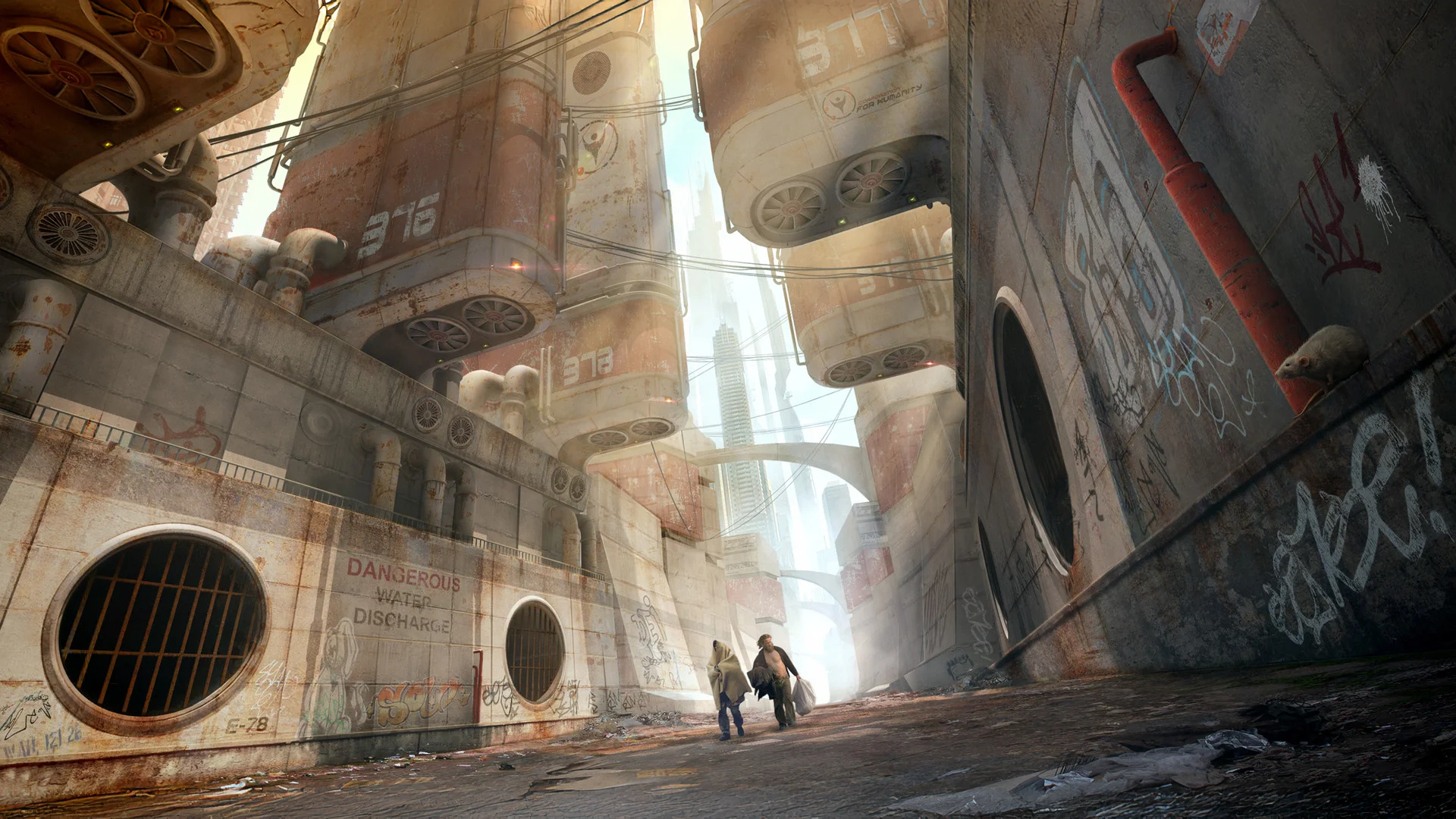
Universal technological resurrection, as envisioned by the philosophy of cosmism, is not meant to be a one-time event, but a gradual, carefully managed process. The pace of retrievals from the past can and must be regulated, carrying them out as the host civilization becomes ready.
This is a crucial point: we are not talking about chaotically flooding the future with billions of resurrected people, but about a phased integration, where every step is carefully calculated to account for potential problems and risks.
Technological Prerequisites for Abundance
Today, we can already see the pathways that will lead humanity to an economy of abundance, where the cost of producing goods, food, and even buildings will drop to virtually zero. A friendly Artificial Reason or nanotechnology, or the convergence of AI with robotics, will likely be enough. Of course, it is also possible that something else entirely will emerge.
Nanotechnology: How It Works and Its Potential
Nanotechnology is the manipulation of matter at the atomic level, creating interconnected networks of nanorobots—essentially, nanofactories. Our country's leadership understood the potential of this field, which led to the creation of the Rosnano joint-stock company, headed by Anatoly Chubais. They wanted the best, but it turned out as always.
Perhaps the most basic thing that could potentially be made using nanotechnology is a ten-by-ten centimeter diamond. According to Eric Drexler, the estimated creation time is about an hour. The raw material is carbon. A cartridge for this task could even be filled with ordinary pencil lead: graphite and diamond consist of the exact same substance, differing only in their crystal lattice structure.
Nanotechnology operates at the atomic level, and it is these structures that nanobots will be able to disassemble and reassemble.
Giving humanity plenty of cheap diamonds brings no significant benefit. The task of printing, say, a hamburger in the same way—perfectly accurately, with all the intracellular organelles of meat damaged by heat treatment—is much more difficult, tens or hundreds of times harder than making a diamond. Yet, theorists have found no physical reasons why this would be technically unfeasible.
A Revolution in Production
By developing nanotechnology to a level that allows the creation of bread or meat, humanity will gain the ability to produce practically anything—from a perfect copy of a Swiss watch to an entire car. For mature nanotechnology, there is no fundamental difference in what to create, as long as the structure of the object is described in detail. The description above is, of course, simplified, but the essence of nanotech lies precisely in these capabilities.
Imagine a future where you download a template file from the internet and, on a home nanoprinter the size of a large microwave, reproduce a dish created decades ago by a top Italian chef. The raw materials for such devices would simply be a set of chemical elements from the periodic table.
Like ants in a colony, nanorobots will be able to both build and dismantle. A landfill accumulated over decades could be broken down into its constituent elements and turned into raw material blocks for nanoprinters. These same robots could potentially construct buildings with properties unattainable with today's materials. In the long term, this technology will make it possible to terraform and develop entire planets.
The inflation of a term
Unfortunately, the word "nanotechnology" has suffered semantic inflation in the media. The prefix "nano-" began to be tacked onto almost anything, giving rise to "nanowashes," "nanotractors," and other marketing gimmicks.
In reality, practical achievements are still limited to nanofilms or carbon nanotubes used to enhance the properties of certain materials and make other minor improvements.
Amid this media noise, the public's understanding of the truly revolutionary potential of molecular nanotechnology has become diluted and almost lost.
Startups are not suited for achieving civilizational breakthroughs on the scale of spaceflight or controlling nuclear fission in a reactor. Tasks of this magnitude are economically unfeasible and therefore of no interest to venture capital. Carrying them out requires a will of a completely different order.
Artificial intelligence and robotics
Another technology capable of radically changing our world and social order is artificial intelligence working in synergy with robotics.
The best modern humanoid robots are already approaching human levels in their ability to manipulate physical objects. Their main limitation is their underdeveloped cognitive abilities—their "brains." But this is only a matter of time. Once incremental improvements reach a critical mass, a phase transition will occur, and truly intelligent robots will be able to replace humans in almost all areas of physical and intellectual labor.
An important distinction: artificial intelligence versus Artificial Reason
Here, it is crucial to distinguish between two concepts:
Strong Artificial Intelligence (AI) is a highly efficient tool and assistant capable of solving complex tasks, but lacking self-awareness and true autonomy. It is a perfect servant with no desires, self-consciousness, or fear of its own.
Artificial Reason is qualitatively different: a fully-fledged person on a non-biological medium, possessing self-awareness and free will.
One can anticipate potential issues with motivation, which in humans is predetermined by evolution and biological architecture. However, this question lies beyond the scope of our current discussion.
In any case, Artificial Reason raises fundamental ethical questions, highlighting the need to legally establish the rights of such entities and to ban their exploitation.
Unlike strong artificial intelligence, the creation of true Artificial Reason seems to be a long way off—despite the hype from creators of modern neural networks, who often label as "reason" something that is fundamentally nothing of the sort.
The social consequences of automation
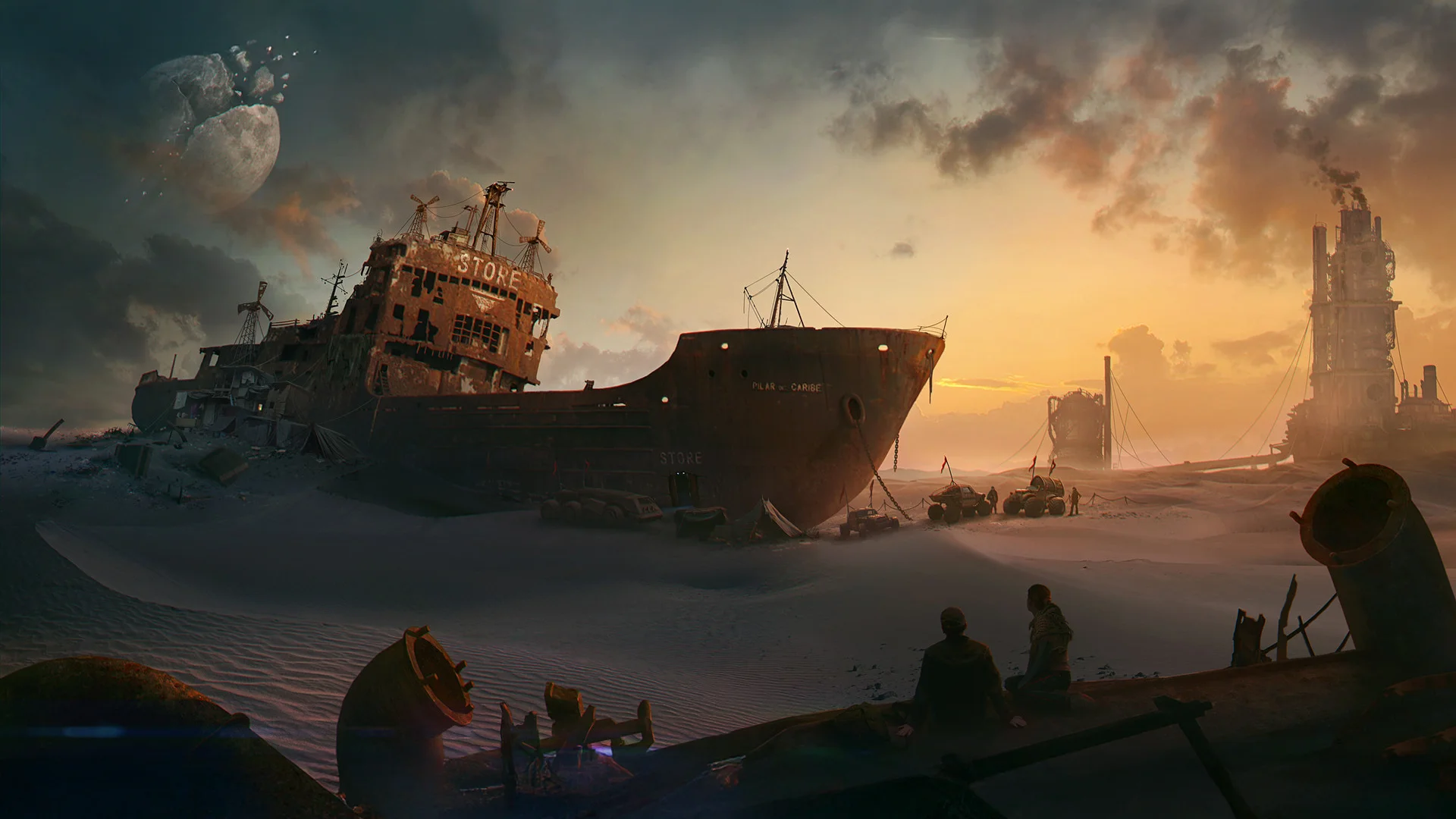
The prospect of total automation causes reasonable concern for many: what will happen when employers no longer need human workers
However, when a human is replaced by a robot, the amount of material wealth does not decrease—it increases, because robots work more efficiently and around the clock. Even a fraction of a robot's productivity is enough to provide a steady income for a laid-off employee. Thus, the issue is not production itself, but the fair—or unfair—redistribution of the wealth created.
Today's fears about how much 'withdrawal' will cost, or how many years one will have to work to pay it off, will almost certainly become obsolete.
Wasted Wealth
Humanity is already potentially very wealthy, but we spend most of our available resources unproductively or waste them outright. To understand the scale of the problem, let us look at a few examples.
Gold
Why does humanity continue to mine gold For any individual company, the answer is obvious: profit. Gold is a measure of value, a safe-haven asset, and a liquid state reserve.
But from the perspective of humanity as a whole, we have already mined enough gold for all practical needs for centuries to come. To continue mining is to burn resources just to increase stockpiles of a metal that sits uselessly in vaults.
Global gold mining creates an illusory value of about three thousand tons of metal per year. With those same resources—human labor, energy, and machinery—we could keep paying wages to everyone involved while also building hospitals, advancing science and education, and producing food to send as humanitarian aid.
The Concept of the Common Pot
If we imagine humanity as a single system with a common pot of resources and wealth, then each of us, through our actions, either adds real value to this pot or withdraws from it, creating only an illusion of usefulness, and sometimes even deliberately destroying what others have built—for instance, in competitive struggles.
One can earn a living by creating wealth—producing food, building houses, healing people, and teaching children. Or, one can earn a living by creating hardship for others.
If you stop to think and are honest with yourself, you can see what your actions mostly create—wealth or hardship—and what the organization you are part of actually produces. In most cases, the answer is obvious: you are either contributing, acting as a parasite, or destroying the wealth created by others.
The Price of Confrontation
Pursuing narrow national interests at the expense of humanity as a whole leads to a colossal waste of resources. Military-industrial complexes, armies, navies, and military bases all consume massive resources without creating any real wealth.
Armed conflicts directly destroy accumulated wealth, to say nothing of the human tragedies involved.
This is, of course, not a call for naive pacifism, but an attempt to draw attention to the price humanity pays for its inability to reach agreement. The lack of rational optimization and the low efficiency across various systemic levels are largely driven by conflicts between private and public interests, and by our division into clans representing these interests.
This inefficiency is visible everywhere, in matters large and small, and the total loss of wealth is measured not in percentages, but in multiples.
For humanity to achieve immortality and resurrection, it must first achieve forms of unity. Without a great, unifying idea for all mankind, humans remain competitors, or even enemies, to one another. This is one of the key reasons why the philosophy of Russian cosmism is so significant.
Science without results
Today's academic environment is often more concerned with publication counts, citation indices, and securing grants than with real breakthroughs. The incentive system for scientists is structured to reward the illusion of activity rather than actual results. In this system, a researcher who publishes a hundred mediocre papers is deemed more successful than one who spends years working on a single groundbreaking discovery.
Innovation without innovation
The startup model, while effective for certain tasks, is mechanically applied everywhere, even where it does not fit. Innovation budgets are spent by people who do not even understand the difference between innovation and modernization. This creates the illusion of intense activity in the complete absence of meaningful and desperately needed progress.
The substitution of goals
Through aggressive marketing, multinational corporations no longer just sell products—they shape life values and create artificial needs, centering everything entirely on their own profit.
People are urged to fill the existential void left by the loss of genuine meaning with consumption.
A monstrous inversion has occurred: people have become nothing more than a resource for capital. Yet capital should serve as a tool for unlocking human potential, not the other way around.
The path to genuine abundance
Transitioning to an economy of abundance is not just a technological challenge. It requires changes in social relations and overcoming the contradictions between private and public interests.
Technologies—nanorobots, artificial intelligence, controlled thermonuclear fusion, and others—will provide the tools. But using these tools to create genuine abundance, rather than new forms of inequality and exploitation, will require humanity to make a conscious choice: prioritizing cooperation over competition, and the common good over private gain.
In the context of the project of universal resurrection, this means we must not only build the technological foundation for abundance but also resolve fundamental social contradictions.
Otherwise, abundance will coexist with artificially maintained scarcity, where the sum of our technologies will serve to deepen inequality rather than liberate humanity.
The science of happiness: from philosophical questions to technological solutions
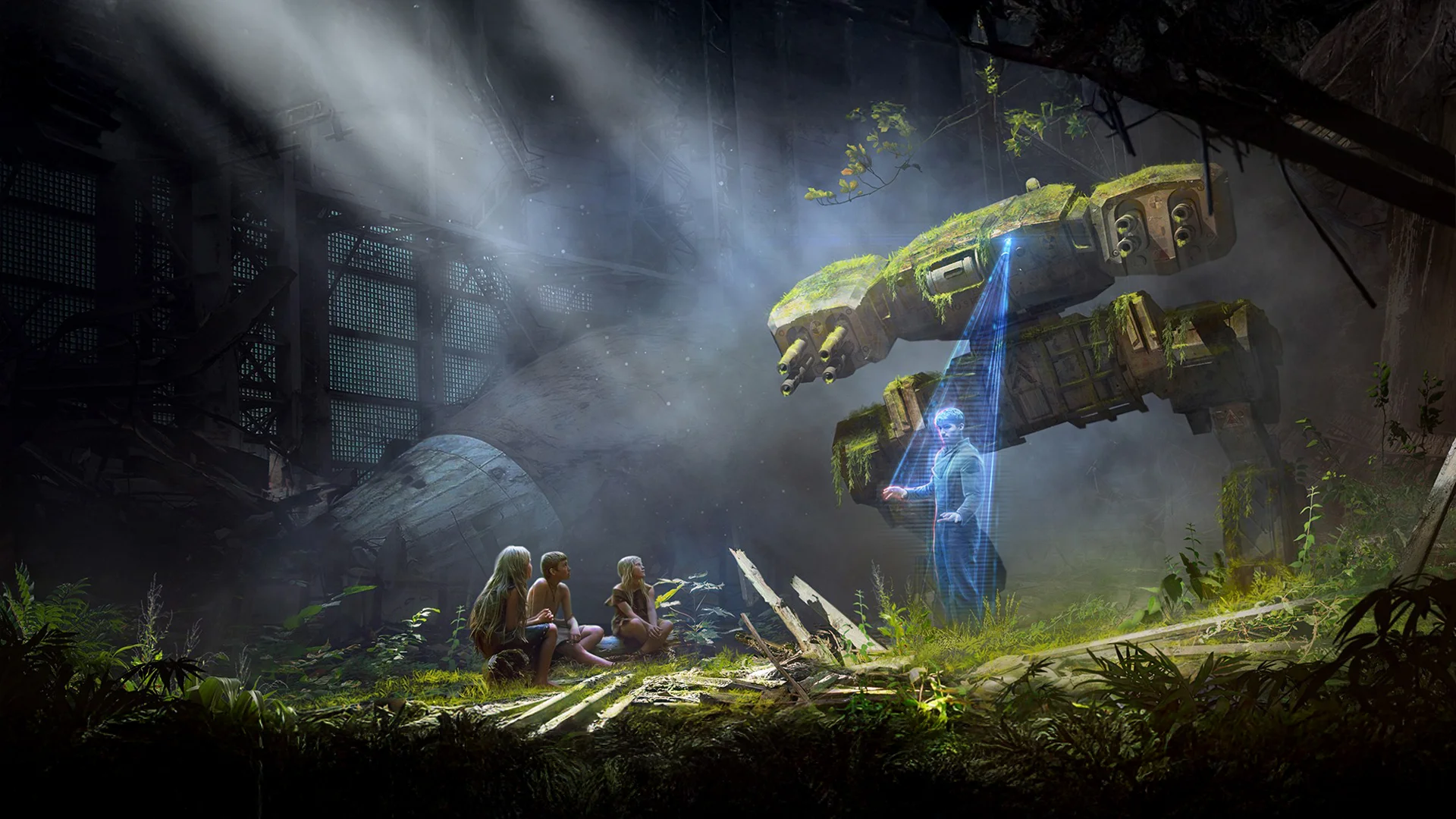
What is happiness Is everyone capable of experiencing it How does happiness differ from joy If joy is merely a temporary state of mind, is it possible to prolong it by orders of magnitude And if all the necessary conditions for happiness seem to be in place, yet happiness itself is missing, what is the reason
Even defining the very concept of happiness is a subject for a major philosophical discussion. Ask different people how to achieve happiness, and you will get vastly different answers. The suggested recipes will be so highly individual that you will not find a universal formula.
Many do not even fully realize that success and happiness are two completely different peaks, often lying in opposite directions.
Where happiness comes from, where boredom comes from—people do not know, and science remains silent.
The basics of happiness studies are not taught in schools. Surprisingly, such a vital aspect of human existence remains outside the scope of systematic education. An 'Institute of Happiness on Tverskaya' sounds more like a joke than the name of a serious scientific institution. Virtually no one is working on applied happiness studies in a methodical, scientific way.
Perhaps the time for this has not yet come, as other priorities seem more urgent. There are psychoanalysts, life coaches, and personal growth gurus, but on the whole, in this most crucial of matters, people are left to their own devices—searching, striving, and making the same mistakes over and over, generation after generation.
Spiritual practices, personal growth seminars, Maslow's hierarchy of needs, and traps like the goal of making a million dollars are all sometimes clumsy attempts to fill the vacuum of systematic knowledge about happiness. Without any scientific foundation, these approaches remain fragmented and contradictory.
State priorities and human happiness
The truth is, governments simply do not have time for individual happiness right now. Their care for citizens is expressed through social benefits, accessible healthcare, urban improvement, and the development of infrastructure and education. All of this is, of course, important and necessary, but it is only the foundation.
Today, the main word Russia should promote is the word "happiness". We are a country of human happiness,
To this day, governments prioritize developing new weapons, launching satellites, or outperforming a potential adversary over ensuring the happiness of the actual people participating in this race. It might seem that this is just the way things should be, simply because no one has ever seen it any other way.
Арестович Алексей Николаевич включён Росфинмониторингом в перечень террористов и экстремистов. Объявлен в федеральный розыск.
In the future, human lives, happiness, and its qualitative characteristics will become the primary global priority. After all, what other priority could a world of humans possibly have
"Today, the main word that Russia should promote is the word 'happiness.' We are a country of human happiness," declared Artemy Andreyevich Lebedev, a man who has visited every country in the world.
Let the United States of America continue to claim that they have freedom and democracy. Russia should declare that its priority is the grace of its citizens. This could be an excellent competitive ideology.
Artemy Lebedev is echoed by Aleksey Arestovich, who revives the Aristotelian term "eudaimonia" to point a way out of the modern inferno in his analysis of "The Bull's Hour," a book by the Soviet science fiction writer Ivan Yefremov. An audio clip of this analysis is provided below. By framing the question of happiness, grief, and joy in this way, we radically alter civilization itself and the direction of social development, which could ultimately reshape the global order and steer it in a more positive direction.
Some today might smirk skeptically: "What Russian happiness are you talking about" Go to the regions, to the heartland, and see how people there survive on meager wages and pensions.
Prosperity, of course, is necessary—it is an important, though insufficient, condition for happiness itself. Happiness lies not so much in money and consumption, though when you have no money at all, it is hard to agree with this statement. What, then, does it consist of How does this magic arise in people's warmth of soul How do we nurture and cultivate it
Judging by the cultural code, by the archetype of a unique understanding of justice where truth is more important than profit—where else but in Russia should we talk about this and try to build it After its next self-assembly, of course.
For now, however, we see a general ideological vacuum rather than viable attempts in certain regions to spell "happiness" using the letters of "ruin."
A warning from the laboratory: the Universe 25 experiment
In the context of reflections on happiness, the Universe 25 experiment is highly instructive. This was the twenty-fifth attempt by ethologist John Calhoun to build a mouse utopia, and all previous attempts had ended in the same tragic way.
Despite an abundance of food and water, the absence of external threats and disease, a comfortable temperature, and ample space, the mouse colony invariably degenerated and died out.
After an initial growth phase came a period Calhoun termed the "behavioral sink"—a breakdown of social bonds, aggression, apathy, and a refusal to reproduce. In the end, the entire population perished despite complete material abundance.
Humans, of course, are not rodents, but certain trends in modern civilization draw troubling analogies. Depression is becoming an epidemic in the wealthiest nations, birth rates are falling precisely where material conditions are best, and social atomization is rising, clearly correlating with growing prosperity.
The transhumanist approach: engineering happiness
Transhumanists believe that radical interventions to redesign the human body are both permissible and desirable, including the systems responsible for emotional states.
In the future, once science achieves a deep and precise understanding of the brain's biochemical processes, it will become possible to intervene effectively in the internal reward system gifted to us by evolution.
By influencing the neural, immune, and endocrine systems, humans will be able to literally manage their mood and state of mind, tailoring it to current tasks—whether creative work requiring inspiration or complex cognitive processes.
A healthy balance will likely be found—a set of "keys to happiness" rather than just a way to get a perpetual high from any activity. This is not about chronic drug-induced euphoria, but about constantly maintaining a natural, optimal psychophysical state necessary for a full, productive, and joyful life.
Biotechnologies of youth
In the future, biotechnology and cognitive technologies will be used to maintain physical and emotional youth. This includes not only healthy hormonal homeostasis, but also the optimization of all other vital signs.
Imagine a state where you always have energy, clarity of thought, and emotional openness—where you have both the desire and the ability. This will become an integral element of the very Man-Made Paradise that the philosophy of cosmism speaks of.
The Illusion of Happiness in the Consumer Age
Today, happiness often turns out to be nothing more than a lure—an animation on a screen dangling from a bracket bolted to your head. It is impossible to get any closer to this screen: wherever you go, it moves with you.
People are constantly surrounded by images of happiness. The ritual of consumption teaches us to feign delight over what is essentially an imposed, empty bustle.
All mass art ends with a happy ending, deceptively extending happiness into eternity. All other scenarios seem to be forbidden.
Even a fool can see that aging and death lie just around the corner. But they are never allowed to stop and think, because images of joy and success bombard them from every side.
The Biological Tragedy
Of course, there are temporarily happy people. But few in our world can be happier than their own bodies. And the human body is inherently unhappy—it is busy slowly dying.
We strive for happiness in bodies biologically programmed for decay and death. Aging is not just the accumulation of years; it is the gradual decline of all functions, including the capacity to experience joy, enthusiasm, and love.
In the context of the Russian cosmism project, this means that resurrected generations must return not just to life, but to a life filled with genuine happiness—not illusory and fleeting, as it so often is now, but deep and lasting, based on overcoming the very biological causes of unhappiness and suffering.
Human satisfaction is not absolute, but relative.
The people we let into our circle are our rivals, closely watching our every success and failure. We compete with them, even if we think we do not, and they try to surpass us. We constantly compare our fortunes and achievements. Friends are supposed to witness our success, but they do not really want fortune to smile on us more than it does on them. We envy our friends, and they envy us, because these are the milestones by which we measure our own growth.
We can understand and accept, even with cold contempt, that we are all running a rat race against each other. But we do not want to leave this race. We want to win it, and in doing so, we fail to see that we could have chosen something completely different.
It is easy enough to endure someone else's misfortune, but accepting their success is incredibly difficult. Sometimes people consciously or unconsciously distance themselves to avoid feeling envious or angry—at themselves for their lack of happiness, and at the other person, who seems to have more blessings, and therefore more happiness.
Recommendation on the Topic
As another reference, we recommend Andrey Kurpatov's lecture 'How to Be Happy', prepared for the third Social Innovation Forum of the Russian Federation.
Diversity and transformation: on the value of every individual in the resurrection project
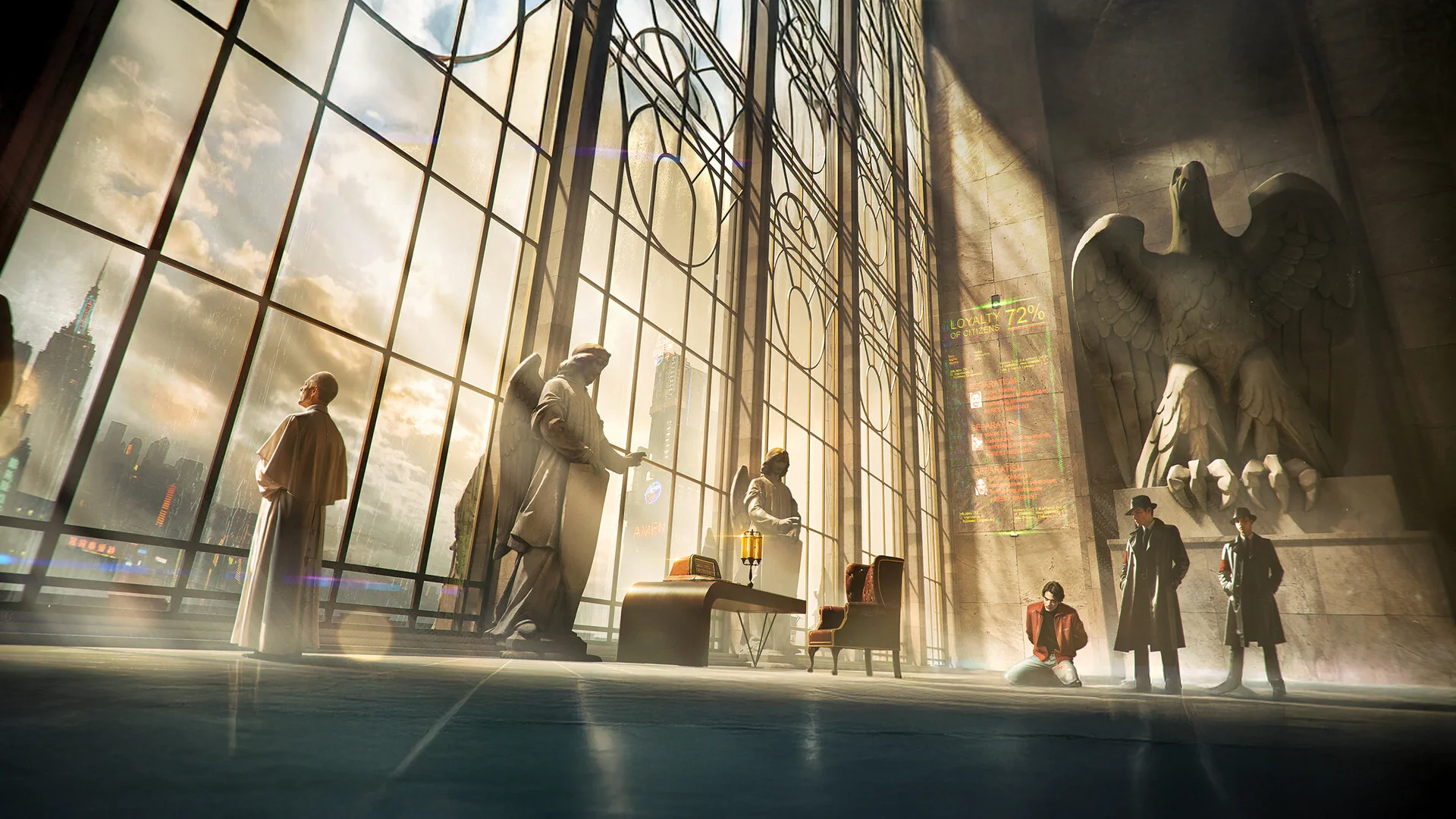
The process of "retrievals" will almost certainly begin with the simplest cases, moving on to more complex ones as our overall readiness for this grows.
The danger of selection
Trying to select only "perfect angels" or turn all of humanity into them would be an obvious mistake. Dividing people into those who are worthy of salvation and those who are not is a highly archaic concept of righteousness. It may have been intentionally written into revered religious texts in the past to set a clear moral direction and simplify complex ethical nuances.
We must not forget that religious texts were written for people who lived over a thousand years ago, not for our contemporaries.
By trying to sterilize and refine humanity based solely on our current ideas of what is good, we will inevitably lose something vital—something that lies far beyond our always highly limited personal perspectives.
The seed metaphor
After retrieval, every person should be viewed as a seed. Each seed from the past represents a unique combination of genes, experience, cultural context, and life circumstances. It is precisely in this uniqueness and diversity of individuals that their enduring value lies.
A seed is potential, not a final form. Once planted in new soil, each resurrected individual will be able to continue their unique evolution, gaining fundamentally new, unprecedented opportunities and tools for personal development and transformation.
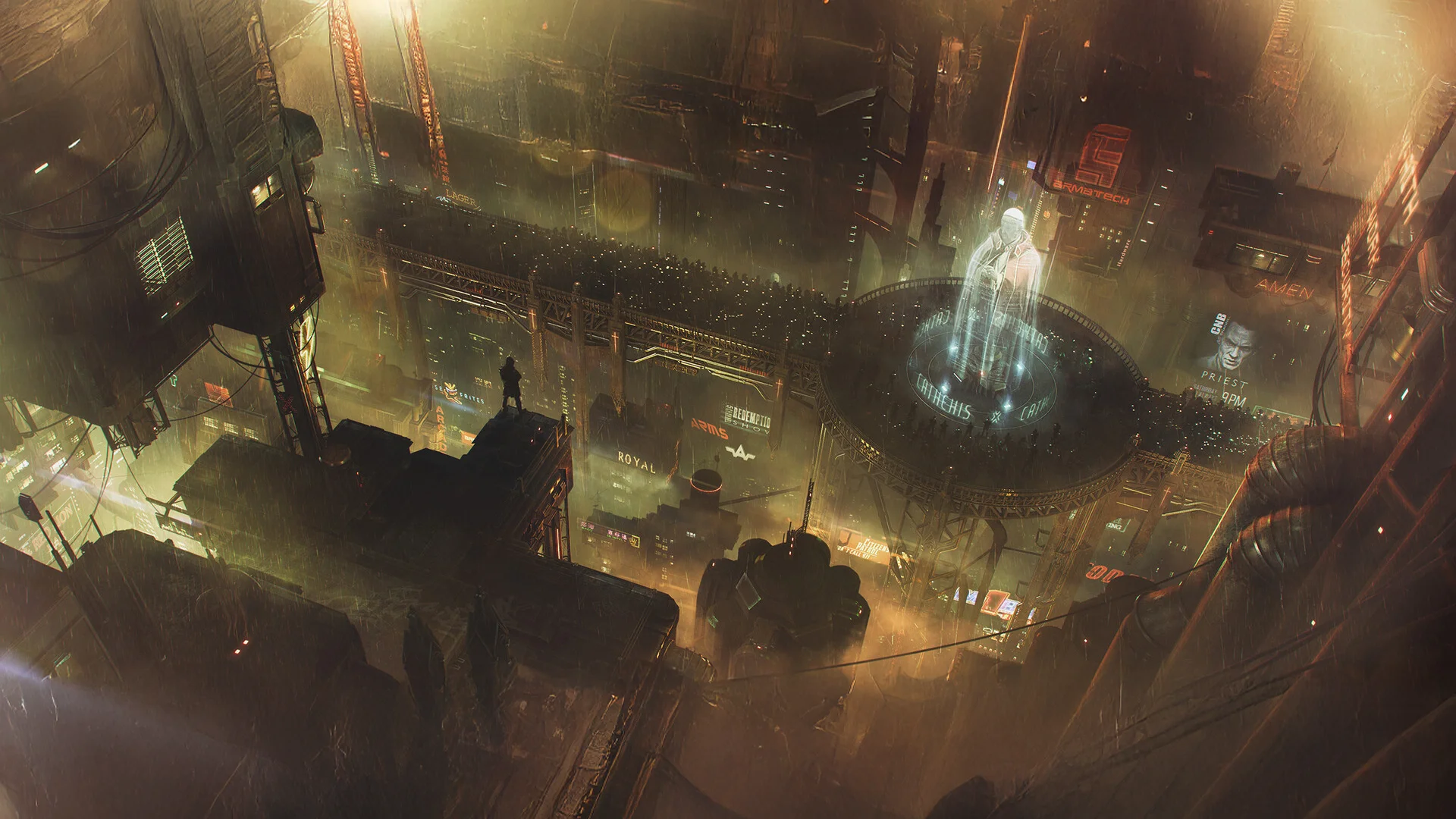
Together, this diversity of individuals will generate even more conscious and varied movement. Life is movement, and we can only wonder where it is headed and to what end.
Perhaps this is how the Universe seeks to understand itself, through the myriad of our tiny, individual perspectives. Perhaps learning and development are fundamental properties of living matter, hardcoded into its very source code. Perhaps there is a grand design that we are not yet capable of fully grasping.
But one thing is clear: diversity—even excessive diversity—is critical for life. In uniformity and sterile "correctness," there is no movement, and therefore, no life.
Transformation through immersion
"Retrievals" will multiply the potential diversity of human experience and activity. Entering a new environment—perhaps one carefully designed for gentle adaptation—the resurrected individual will find themselves in a web of circumstances and life situations that will inevitably begin to change them.
They will begin to evolve mentally, re-evaluating the prejudices and assumptions that we all carry. They will be especially successful if guided by experienced mentors—those who have already undergone a similar transformation.
Through this new understanding, everyone will be able to look differently at their past and at actions—both their own and those of others. They will understand the root causes, and through this understanding, perhaps forgive what once seemed unforgivable.
Octaves of perception and empathy
In the future, a person's transformation will be driven not only by what they can grasp intellectually, but also by what they are capable of feeling. And here, we approach the concept of our sensory limitations.
Today, every individual has a rather limited range of perception. An intelligence general who spent half his life securing borders against external threats; a pop star living in a world of fame and adoration; a young woman who has spent years meditating in an Indian ashram—they all share the same planet, yet they inhabit completely different worlds. Their sensory ranges are almost entirely inaccessible to one another.
Imagine the full range of possible feelings, sensations, and states as a piano the size of a barge. Yet, each person currently has access to only about one octave of this grand instrument.
Some are luckier—they perceive several octaves, and the world is richer and more diverse for them. Others are less fortunate—they play the symphony of their lives on just three notes.
Some pathologically hammer away at a single key, hoarding money and power on a scale that impoverishes entire nations, while the rest of life's rich diversity simply does not touch them—they are deaf to those frequencies.
These kinds of distortions, addictions, and limitations could be treated by expanding the range of perception and increasing openness to new experiences.
This will require a comprehensive approach, including both experiential therapy and direct technological intervention—perhaps even through partial, voluntary re-imprinting and a restructuring of the body's dopamine reward system.
Elon Musk's Neuralink project promises in the future not only to read specific thoughts, but also emotions—recording them in high resolution and then transmitting them to another person. Someday, it will be possible to share an entire personal worldview this way, which in itself could lead to a radical reassessment of values.
It will be possible to read and transmit more than just positive experiences. The nearly one million civilians who died during the war and the subsequent humanitarian disaster in Iraq are just statistics to us now, as are the figures from Libya, Syria, and other conflicts.
But what did the survivors feel, those whose homes were destroyed, whose lives were shattered, whose relatives were killed If people had access not just to biased news, but to the actual sensations and experiences of the victims in real time, if they could feel the true scale of the tragedy, completely different decisions would be made. And they would likely be made in a very different way.
From Division to Unity
Groups of primitive hunter-gatherers usually did not exceed one hundred to one hundred and fifty people, where all members of the tribe knew and understood each other perfectly. Agriculture allowed the population to grow significantly, but as a result of this scaling, people lost their mutual connections and became globally disconnected. This gave rise to systemic contradictions—and to those who learned to exploit them.
Various approaches—both social and technological—are potentially possible to restore this lost unity. Perhaps the internet itself will transform into a kind of collective mind, becoming an extension of the self for each individual. If so, meaningful decisions would be made through some form of direct collective consensus, rather than in parliamentary hearings by a handful of corrupt representatives.
It is difficult to predict the specific mechanisms of these changes. But it is important to understand: the past is not a life sentence. What seems so important and unforgivable today may be viewed in the future as old childhood squabbles that have completely lost their significance.
A Civilization of Forgiveness
The project of universal resurrection is not merely a technological achievement. It is a project to create a civilization capable of embracing the entire diversity of human experience, including its dark sides, and transforming this diversity into richness.
Each resurrected person is not an object of judgment, but a subject of development. Every individual, regardless of who they were at the moment of death, will have a chance for transformation, for expanding their perception, and for understanding and forgiveness.
In this context, these 'retrievals' are not simply a return to life, but an invitation to participate in a grand project—the emergence of a new, more complex, and harmonious form of intelligent life.
A form of life where diversity is not a source of conflict but the foundation for a symphony, where every note, even a dissonant one, finds its place in the shared harmony.
Is this a utopia Perhaps. But the entire history of humanity is a journey from the impossible to the possible. And if we learn to resurrect the dead, we will also learn to create the conditions for their genuine transformation and integration into a single, yet infinitely diverse whole.
Power and the security architecture for one hundred billion people
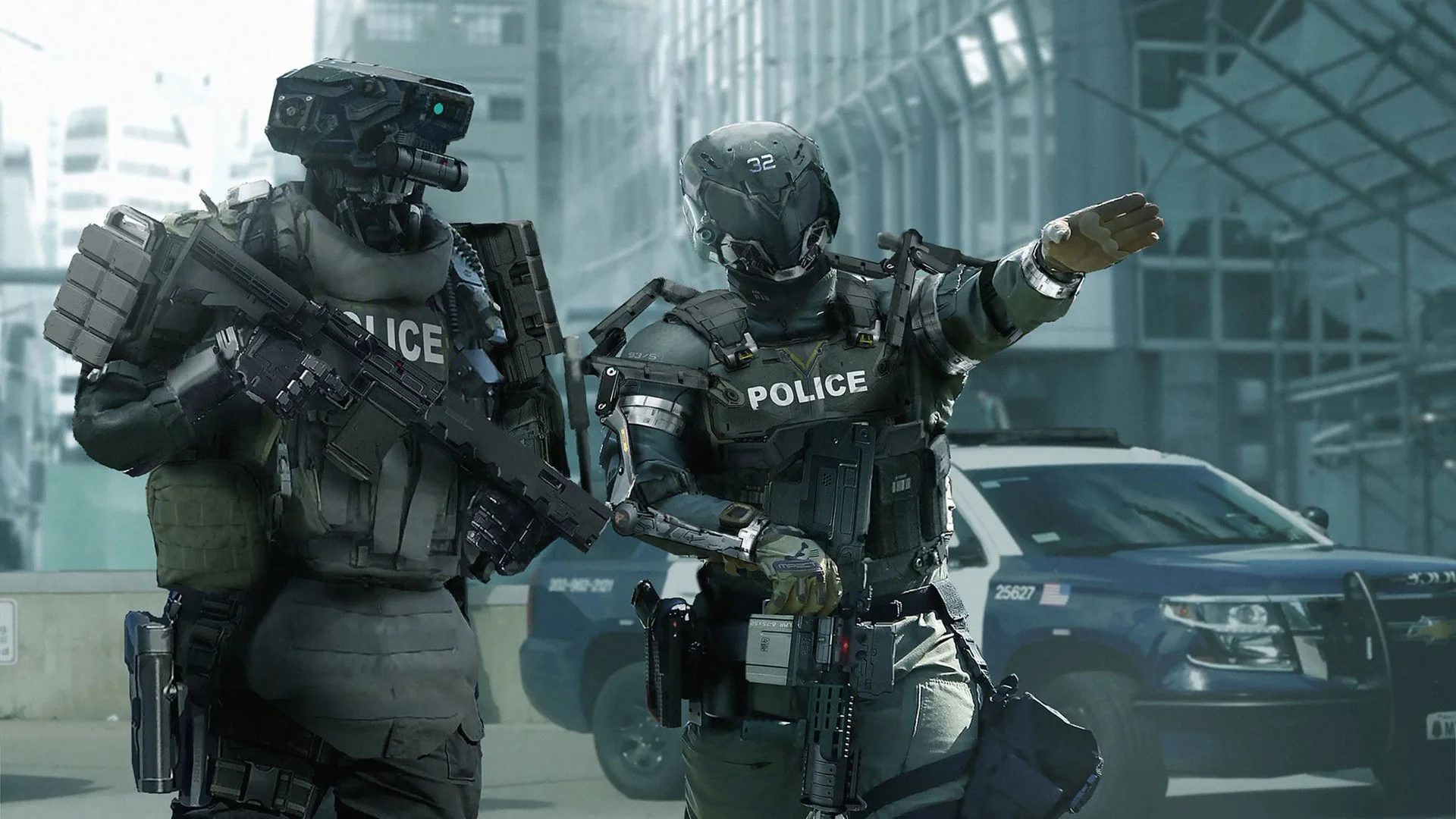
The modern order is based on the power of some people over others and the state's monopoly on the use of force. Out of habit, it is difficult to think within any other framework, or even to imagine the existence of an alternative—a world where power as such does not exist because it is simply not needed.
Our entire history is a chronicle of domination and submission, of hierarchies and revolutions, of tyrants and liberators. We are steeped in this rather combative paradigm, where the absence of power seems synonymous with chaos.
Technological freedom or total control
In a purely hypothetical society of the future, it might be physically impossible for one person to strike another without their consent. No acts of aggression—verbal, psychological, or physical—would be possible if the recipient did not wish to accept them.
But how to actually achieve this while remaining in a biological body is still unclear. We can, of course, fantasize about neural interfaces that block aggressive impulses, or nanobots that paralyze muscles during an attempted act of violence. But who will control these systems And won't they become tools of total enslavement under the pretext of absolute safety
Hierarchy as a necessity
Today's systems have built-in hierarchies, without which they inevitably fall apart. Is it worth dreaming of rights and freedoms separated from responsibility—or separated entirely from a regulator in the form of power structures
At least today we can quietly reflect and philosophically debate this topic without fearing the Inquisition's rack or crucifixion by order of a Roman procurator.
Anarchism is a general term for belief systems that reject the need for coercive governance and the power of one person over another. Anarchists advocate for self-governance, and there are many different schools of thought that often diverge on various issues, from minor details to fundamental principles. The branches of anarchist philosophy span a wide spectrum of ideas, from extreme individualism to stateless communism. Some anarchists reject any form of coercion and violence altogether—for example, the Tolstoyans, who represent Christian anarchism.
The vulnerability of any architecture
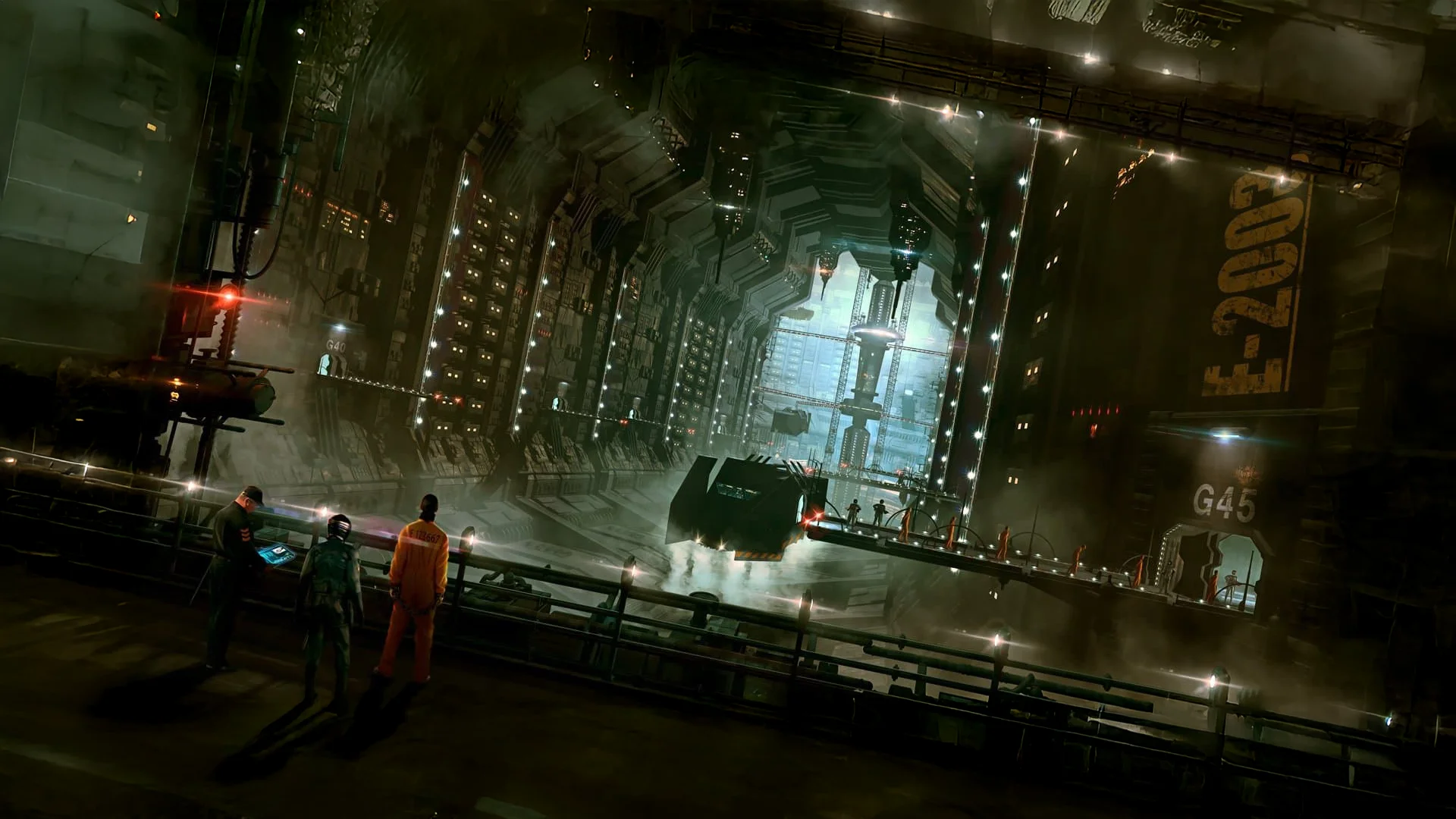
The very presence of a governing structure in the HyperWorld is a clear vulnerability:
Centralized power can be compromised from the outside.
It can mutate from within.
Control can be seized.
The management system could lose its relevance, leading to its collapse due to contradictions brought about by new circumstances and insights into the mechanics of social interaction.
A decentralized system of governance and power is also not without its flaws and vulnerabilities. How do you create a code with an unbreakable foundation of statements and principles to last for centuries and millennia
If its principles must be flexible, the question arises: how flexible, and to what extent can they transform If you lay down rigid, fundamental foundations, they will eventually become obsolete and turn into shackles.
Given that we are talking about the fates of at least one hundred billion people, errors in the basic architecture could lead to catastrophic consequences.
A jar of spiders or harmony
The approaches used today to secure social compromise are not just imperfect—they are unstable even on the scale of centuries. The history of the twentieth century is the collapse of all great ideologies: communism, fascism, and now liberal democracy, which is experiencing a profound crisis.
It seems that fundamentally different approaches to regulation will have to be built into the foundation of the HyperWorld. But what kind
A world of people devoid of common principles, ideas, and beliefs inevitably mutates into a jar of spiders devouring one another. Is the existence of truly humanistic systems even possible without some form of ultimate coercion, such as the supreme ethics of God
The root of wars
Some kind of shared, overriding ethic that sets priorities is necessary to keep the system from falling apart from internal contradictions. A new ontology, and a new ethic based on it, can be formulated using the ideas of Russian cosmism.
But what should be done with those who refuse to share this ethic And what will this minority—or majority—surely try to do in the future, simply because they are strong and they can
Here it is—the indestructible root of war. But is it truly indestructible And do we even need to eradicate it
Stakes and responsibility
We are not discussing abstract political philosophy, but the potential fates of a hundred billion resurrected souls. A design flaw in the social architecture of the HyperWorld could turn into an eternal hell for billions of beings.
Inaction is also a choice. Leaving things as they are means condemning humanity to endlessly repeating cycles of structural violence, only this time on the scale of an immortal civilization.
The paradox is that creating a world without power may require an unprecedented concentration of power. Someone will have to decide on the basic principles of the HyperWorld. Someone will have to implement them. And this "someone" will wield power far exceeding that of all the tyrants in history combined.
One hopes that by the time such decisions become necessary, humanity will have evolved enough to form a shared vision of a new global compromise. We need a detailed transition plan that we cannot even imagine today, much like people in the eighteenth century could not have imagined internet democracy.
In the meantime, we can only think, debate, and search. Because the quality of our search will determine whether the future becomes a paradise of freedom or a hell of good intentions.
The trap of freedom
A two thousand and seven British Broadcasting Corporation production: "The Trap: What Happened to Our Dream of Freedom"
This is an excellent film about the crisis of humanism. Why do politicians talk about freedom so often, yet the more we hear the word, the less freedom society actually has
The director dissects the origins of this phenomenon with surgical precision, peeling back layer after layer of Western civilization's political and social structure. In doing so, he reveals things we have forgotten, or perhaps never even suspected.
The freedom to choose one's appearance in the era of radical longevity
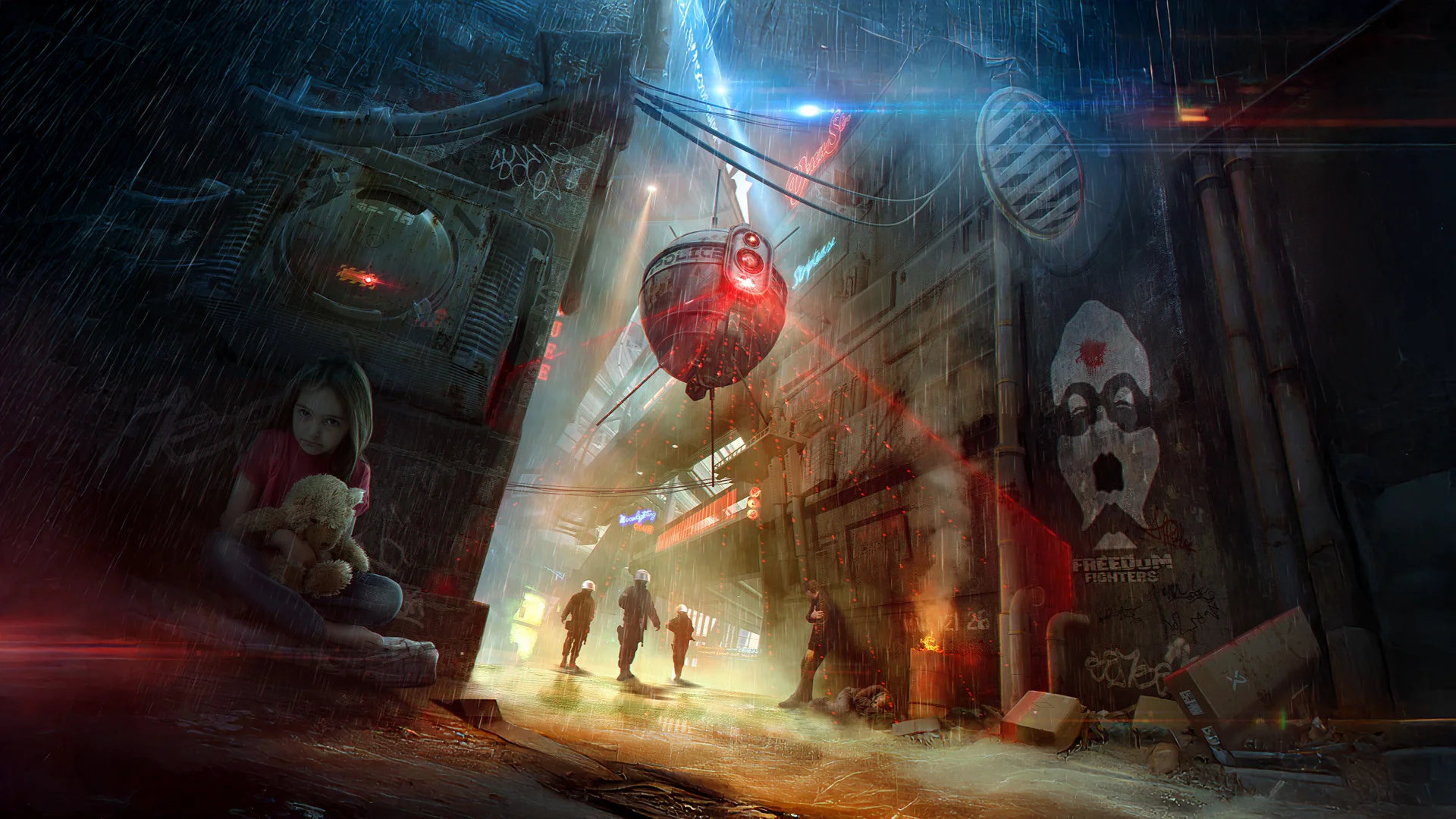
Our ideas about a certain correspondence between age and appearance will inevitably change dramatically once we gain the freedom to radically alter how we look. Comprehensive technology to reverse human aging and rejuvenate the body is, in itself, a significant intervention in appearance.
It is potentially possible to rewrite the genome of a living organism in every single cell and mitochondrion, right during its lifetime. This can be done based on the principles of the existing CRISPR-Cas9 technology, which was awarded the Nobel Prize in 2020.
Appearance as a choice
A person aged two hundred or five hundred years will likely look exactly as they wish. They might look like an energetic, gray-haired elder, a young man or woman, or even a character from a video game or movie. Appearance will be a matter of choice.
The first transformation of appearance will likely be a lengthy process, as the psyche will need time to adapt to comfortably maintain self-identity and self-recognition. Subsequent transformations, if needed, can happen faster, but the first one will be more cosmetic, rejuvenating, and health-restoring in nature.
Changing social norms
People's very perception of appearance and the patterns of expected conformity will change. Many spouses will likely discuss their planned modifications together in advance.
Children retrieved before their parents will, if they wish, be able to bring their bodies into alignment with how their loved ones remember them by the date of their first meeting. A precocious toddler might, of course, shock unprepared parents. In such cases, adding eight to twelve years to their appearance is an option, and the parents will still likely recognize them. In any case, their feelings will almost certainly shine through.
Adapting to the new reality
Much attention will be paid to the psychological adaptation of the retrieved. One element of this will be recreating a familiar environment at first—perhaps even a specific house or apartment, and the selection of groceries and goods in the local store. These will be a kind of local retro-simulation.
The nature of aggression and the ways to transform it
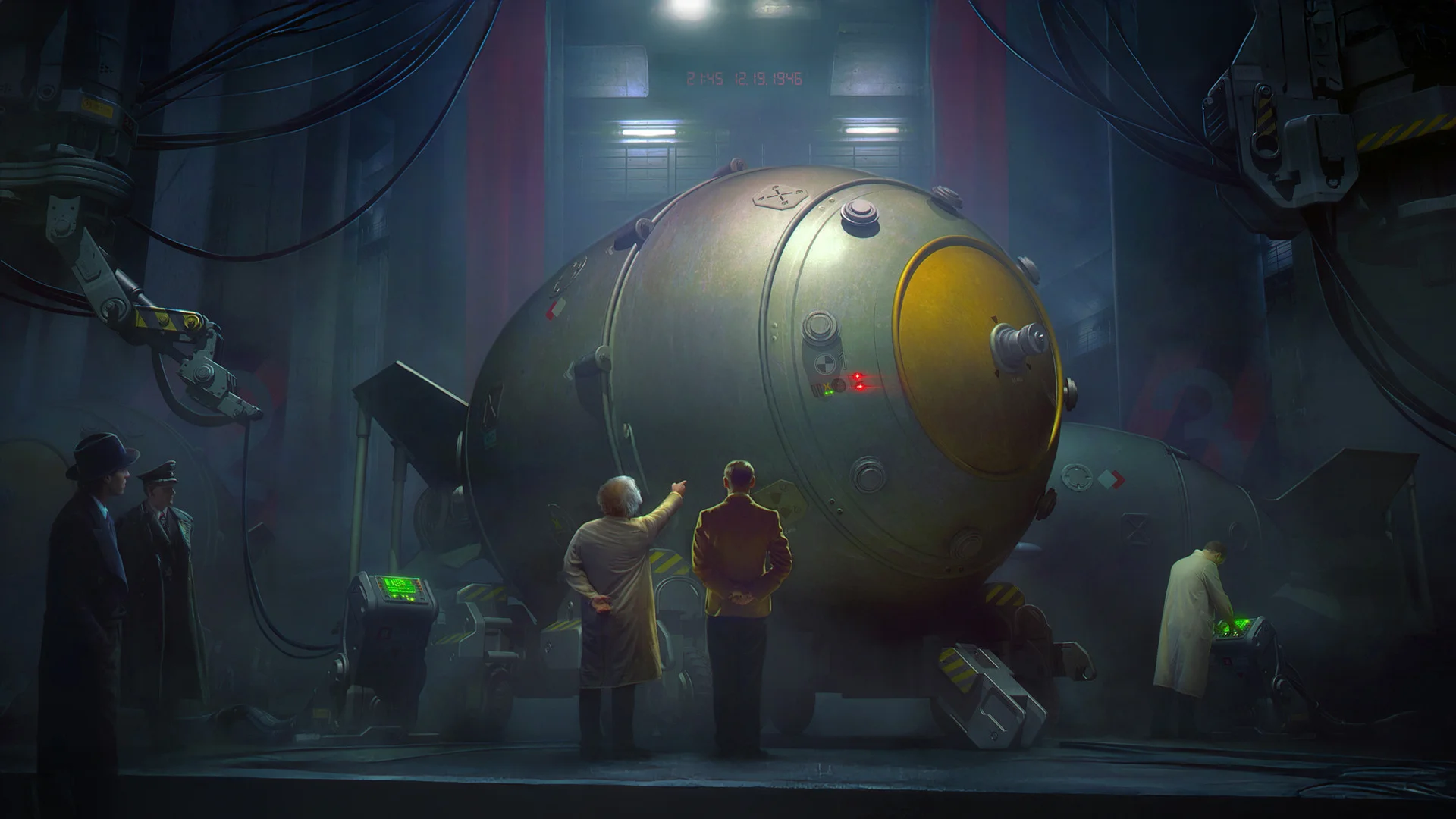
Aggression, violence, and the struggle for dominance in hierarchies are undoubtedly part of our biological nature. By trying to sterilize and refine only what we deem to be good, we inevitably lose something very deep and important in our essence. Furthermore, no amount of proper upbringing can reshape biologically predetermined behaviors—you cannot educate genes. You can force a lion to perform in a circus, but how does such an unnatural daily routine affect the quality of its life
In any case, these "extractions" involve completely different people who have already formed as individuals. They come from different historical periods, with different upbringings and moral principles that will differ greatly even from modern ones, let alone future ones.
The legacy of victors
All of us living today are descendants of victors, the continuation of the best of the best, apex predators and super-cunning survivors who have repeatedly made it through the harshest natural selection. At the same time, seriously believing that there is no evil in you is, of course, a mistake. Everyone has a shadow, often unrecognized or suppressed for the time being.
This inner evil can take hybrid forms, manifesting not openly, but, for example, from the position of someone representing the "correct" point of view, the true religion, law, justice, or even goodness. Our evil grants itself the right to act as it does, often trying to operate in a socially approved manner or at least finding a deeply personal justification for its actions.
The devil begins with the foam on the lips of an angel who has become convinced of his own righteousness and entered the fight for a holy and just cause. The spirit of hatred in the struggle for a righteous cause is eternal. And because of it, evil on earth has no end.
A character like Thomas Shelby, who is fully aware of who he is and what he does, is far more appealing than a scoundrel whose last refuge is patriotism. Each of us is a carrier of evil, and to think that you don't have it in you, while living in a biological body, is highly naive.
The devil begins with the foam on the lips of an angel who believes in his own righteousness and enters the battle for a holy, righteous cause. The spirit of hatred in the struggle for a righteous cause is eternal, and because of it, evil on Earth has no end. Ever since I realized this, I have believed that the style of debate is more important than the subject of debate—subjects change, but style is what creates civilization. — Grigory Pomerants
The externalization of evil
It is precisely the refusal to accept the evil within oneself that leads to its externalization—projecting it onto others, such as a fictional figure of some tyrant who is supposedly to blame for everything, or a group of dissenters. While striving for goodness, sometimes even the highly "enlightened" who have found Zen cannot stop their inner toxicity from boiling over. This pressure seeks an outlet, finding it in their personal attitude toward certain "categories" of other people, in the words they speak, and in their very posture of being supposedly superior to others.
Understanding and accepting the evil within ourselves gives us more freedom and more genuine choice. In each of us, in those very same DNA strands, there is also good. Science still has a long way to go in unpacking the messages in this language of nucleotides, and in deeply understanding who we are, what we are a part of, and what we pass on.
In various ways, both collectively and individually, we try to restrain and suppress these natural manifestations of our biological nature. We try to distance ourselves from our nature and even protest, claiming that humans are not animals.
Possible solutions
There could be several solutions for the future. An interesting concept is shown in the TV series Westworld (2016). We could modify the very essence of human nature—not necessarily through methods as crude as those in Stanley Kubrick's A Clockwork Orange. However, any such modification inevitably brings limitations and coercion, which is just the same old 'violence for the greater good.' This will spark resistance, leading to a new way of dividing people into 'us' and 'them,' and, consequently, another war.
We could try a different path: creating places where everything unacceptable in civilized society is permitted—'war zones' or areas with special rules. Not everyone would want to visit such places, probably only a minority, but for the common good, we must consider this minority as well.
It is not even wars themselves that are bad, but the fact that people who want absolutely nothing to do with them get dragged into these events.
Special Rule Zones
If war is your calling, or if at a certain stage of life your entire being craves such events, experiences, and trials, you do not need to seek out a justifying ideology or some local truth. Instead, go to a specially designed place with limited risks, which you can only enter voluntarily, and leave only in accordance with the terms agreed upon from the start.
The conditions could vary greatly: a territory with firearms, or, say, only swords and arrows. The contract could even include the possibility of complete and final death—albeit with an extremely low probability.
The basic principles are simple: if you want the opportunity to commit violence, to cause harm, damage, and suffering, you must be prepared to receive the same within that same chosen range. Everyone is on equal or near-equal terms—those who risk more should probably also get more opportunities or certain starting advantages.
Everyone's life should be preserved using the same 'extraction' technology, unless other probabilities are specified in the contract. Of course, it would not be as simple as in a video game. After a 'lethal' injury, spending several months under fire in a World War II-era hospital could be quite an adventure, as could being stuck as an invalid for several years in this historical reenactment.
What happens in the special rule zones stays there, and is not carried over into the world where people want no part in violence. What is described here is not even a concept, but rather just a direction of thought.
War as a Way of Learning
Perhaps wars and confrontations in the modern world are also a way of learning, where victory acts as an arbiter and an incorruptible judge. Sometimes truth is not born in an argument; it is recognized only in battle. Who exactly is to decide which is better—capitalism or socialism Who, later on, is to declare that an optimal and reasonable combination of both in a single system is best How can this be declared with such authority and indisputability that everyone agrees Is it even necessary for absolutely everyone to agree and stop searching for other, better ways
Perhaps in the future, wars will remain not only as historical simulations for those wishing to participate. Wars as a way of learning could change and become even more diverse, since at their core, even now, they are primarily informational. Fundamentally, they are a struggle of ideas, of different vectors of movement, a dispute between different truths that together form a single pattern.
One hopes that in the relatively near future we will somehow manage to eliminate such crude manifestations of conflict as tanks, artillery shells, and other lethal weapons. The hope that we will eventually be able to fix everything through 'extractions' or something similar is, for now, just a hope.
The ultimate ground
The ultimate ground is the answer to the question of what exactly you personally are ready to kill and die for, in a situation where you want neither in and of itself. Even without giving themselves an honest answer to this question, many people across the globe are capable of doing both, driven by a kind of 'wind of history.' Meanwhile, experts are able to whisper in their ears so effectively that the warriors do not think about their personal 'ultimate ground' at all, but simply do what is expected of them.
There is no room for war only in the space of love.
There is no room for war only in the space of love.
The evolution of ideas about paradise and the nature of miracles.
To a starving, freezing serf whose daily life is consumed by backbreaking labor and cultural isolation, the idea of Paradise as a reward for the hardships and privations of earthly life might seem highly logical, just, and coherent.
Legends of paradise
The Islamic concept of Paradise includes carnal pleasures. There are legends of certain warriors, dining with their spiritual leaders, who had their food spiked with psychotropic drugs. While unconscious, they were transported to a secret place of unprecedented luxury, gold, and splendor. There were fountains of wine, an abundance of exquisite food, and many beautiful, attentive women. After being allowed to enjoy these pleasures for a short time, the warriors were drugged again and returned to the table with their leader. They were then led to believe they had been shown a glimpse of Paradise, which they could enter after death—provided they remained loyal, willing to sacrifice their lives, and kept what they saw a secret.
These warriors had never seen anything so magnificent, and could not even conceive that such a place could be built by human hands. All in all, it was quite a clever method for recruiting loyal commanders and personal bodyguards.
The transformation of meaning
Today, the middle class in developed countries enjoys far more than the kings of the past. Consequently, the exact nature of the reward awaiting people in Paradise for 'good behavior' becomes less obvious, since almost everything imaginable can already be obtained on Earth. For many, faith alone is enough to follow religious dogma—for many, but certainly not for everyone.
How do we evaluate the worth of the otherworldly and the unthinkable Eternal life in Paradise, and the inability to die even if one wished to, might actually turn out to be a torment. The value of eternal life is subjective and depends on our personal attitude toward it, which could easily change over millennia. The binary of 'eternal is good, temporary is bad' is a massive oversimplification. It is just that, for now, very few people think that far ahead.
Critical discussion of these matters is generally discouraged within religious communities. Yet the point here is not to deny the existence of God or Paradise, but to suggest that our ideas about them—what Paradise is, where it is, and how it works—may be oversimplified, incomplete, and archaic. After all, these descriptions of Paradise were created by and for people who lived centuries, or even millennia, ago.
Conceptually, Paradise is still presented as simply something wonderful, beyond earthly measure, and impossible to fully comprehend or experience. In other words, we are asked to take it on faith that we will be happy there, and this is presented as the ultimate grand prize.
The choice is obvious
But today, the obvious truth is what most modern people will choose once the opportunity arises. They can either do nothing, grow old, and face the Almighty's Last Judgment, or they can use biotechnology to extend their earthly life by a century in a young, healthy body—and then extend it again and again. This choice is no different from deciding whether or not to take a doctor's prescription.
Using the argument of a divine Paradise as a way to bribe humanity sounds rather vulgar. After all, it is still coercion, just using a carrot instead of a stick. The same goes for the argument of Hell. What kind of 'love' for humanity does it take to send some of them to a special place filled with fire, smoke, heat, suffering, and pain, to torture them, burn them, suffocate them, and make them scream and weep for ever and ever, until the end of time Something is clearly wrong here.
Paradise Engineering
There are various potential approaches to paradise engineering—that is, building a man-made 'heaven on Earth.' For example, one project website dedicated to paradise engineering points out that we ignore the biochemical roots of our suffering and suggests transitioning to a post-Darwinian era. It speaks of the possibility of totally eliminating pain and suffering altogether. The noise of political parties and geopolitics distracts us from what actually needs to be done.
From an evolutionary standpoint, pain and pleasure, avoidance and desire, are the driving forces—the incentives for development and learning. Whether we can replace this engine for intelligent life with a more modern one, running on different principles and fuel, remains an open question. But humanity will almost certainly try.
The Search for a Great Hope
An alternative path of historical development, the ascent of humanity, a 'new word'—what does it look like today Is it a multipolar world where different factions, just as before, build up their power in an effort to oppose, or even destroy, one another Or will multipolarity itself make interactions between global players fairer and less bloody More likely, the opposite is true. Where is the hope—the great, historical hope—and what is it built on
Divine humanity is the ideal state of mankind, representing the limit and culmination of the earthly historical process. The idea of divine humanity was philosophically interpreted in the works of the religious thinker Vladimir Solovyov. According to the philosopher Berdyaev, this is a dream-image that accompanies humanity as it strives for 'truth—the meaning of its own existence—and freedom.'
The Nature of Miracles
A few paragraphs about miracles.
In short, they do not exist, yet they happen—and there is no contradiction in this statement. A miracle is a part of objective reality, a possibility that is always there, only hidden from us. It is a potentiality that is completely absent from our current understanding of reality.
If something that we believe cannot possibly exist suddenly bursts into our personal, always limited reality tunnel, we cannot ignore it. The event demands a place, demands an explanation, and by its very presence, it transforms our reality. Before a true miracle happens, we probably cannot even say it is impossible, because we are unable to frame the question of its possibility in the first place. We cannot even imagine that such a thing could happen, and then—bang!—it has already occurred.
Probabilistic and True Miracles
Suppose a person drowns in an icy mountain river, is pulled out thirty minutes later, and resuscitated back to a full life. Or suppose someone spends years on life support and then, for some reason, wakes up from a coma. These situations are not about true miracles, but probabilistic ones.
Jesus's resurrection of Lazarus, if it actually occurred, is a miracle. Although Christianity is not the first religion to mention the resurrection of the dead, for the Jews who were contemporaries of Pontius Pilate, the resurrection of Lazarus would have been perceived as an utterly unthinkable event. It confronted them with something that simply could not be, something they had never even contemplated as possible or impossible. For them, an event of this magnitude is the very definition of a miracle.
The manipulation of miracles
Mayan priests, understanding certain natural patterns, could predict the dates of solar eclipses, which they used to strengthen their own authority and power. They staged elaborate shows on these days, offering sacrifices and feeding their own self-serving interpretation of the event to their uneducated people, for whom what they saw was, of course, a genuine miracle. Christopher Columbus cynically used a similar trick, but with a lunar eclipse, to terrify the Indigenous people of Jamaica into supplying his men with provisions.
A modern light show produced by a laser system can create the illusion of dancing columns on a building, along with other amazing visual transformations. If you had shown something like this three hundred years ago in the Vatican, and even projected the face of the reigning pope onto St. Peter's Basilica, all you would have to do is offer your own interpretation of the event to the stunned audience. How is that not absolute proof of God's existence How many people back then would have been able to doubt such proof, presented as a manifest miracle
A miracle is merely a manifestation of what lies beyond our personal knowledge and understanding of the world. To people living three hundred years from now, we are just as ignorant and savage as those Catholics who burned tens of thousands of witches at the stake might seem to us today.
The problem of personal identity: the boundaries of 'self' and 'not-self'
Are a caterpillar, a chrysalis, and the butterfly they eventually become one creature or three different ones Obviously, these are three organisms completely unlike each other in structure and function. Why, then, do some people believe they are a single creature, just at different stages of development and transformation What exactly unites these three completely different organisms into one Keep your current answer to this question in mind, if you already have one.
The division thought experiment
Let us conduct a thought experiment. Imagine that in some operating room of the future, a person is 'cut' in half, from the crown of their head down, into two equal parts. Next, specialized medical robots use external matter to rebuild both halves, perfectly replicating the missing body parts to make them whole. The result is two physically identical, living human beings. They wake up in different rooms. Then, without being informed of what happened, one is sent to a loving family, and the other to a concentration camp.
Where does the person who existed before the operation go Was the person destroyed—killed—in the process, or did they split, so that they are now the same person but with two bodies that share no sensory connection Where, then, did the esoteric soul go, if such a thing existed, and could it have remained in only one of these bodies
We can modify the thought experiment: instead of cutting the person in half, we use those same medical robots to assemble an atom-for-atom copy, and immediately ensure that no record remains of who is the original and who is the copy. If no differences can be found, can we claim they are the same individual If it turns out that a year ago he committed a crime, do we put both in prison, or what If a court cannot afford to make mistakes and punish those who did not personally commit the crime, does this mean one can escape guaranteed punishment simply by creating a copy of oneself in one way or another
As technology advances, more and more questions like this, with no clear answers, will arise. What if we could use some artificial, technical means to maintain a sensory connection between this pair of people—creating a permanent link between the original and the copy, synchronizing their shared memory, sensations, emotions, and vision Could we then say that this is one person existing in two different places at the same time
From philosophy to engineering
The question of personal identity has already moved from pure philosophy into the realm of engineering, where it has taken on an ethical character. Take, for example, the partial split-brain surgeries performed on epilepsy patients in the 1960s. Symptoms began to emerge suggesting that, after the operation, there were now two personalities in a single brain, with divided control over the body and even the potential for internal conflict.
Dogmas like 'one body always corresponds to one observer' blind us when we try to analyze the very problem of the integrity and indivisibility of the self.
The illusion of simplicity
If you don't think about it, all of this might seem simple. 'I' am me, I have a head, and I use it to eat—what is there to get But if we dig a little deeper and try to understand what we actually mean when we say 'I', a dangerous abyss opens up, and its edge is nowhere in sight.
Where does the boundary lie between the "self" and the "non-self" In reality, it is not as obvious as we tend to think.
Challenging these seemingly obvious natural truths leads to very serious consequences when we discuss the development of biotechnology and even certain existing medical realities. We do not know how to interpret them because our natural cognitive intuition simply lies to us. Yet, this is quite literally a matter of life and death.
There is an innate knowledge, a default setting, or something formed automatically in early childhood—namely, the belief that "I" am my body, and "not-I" is everything else. When you think about it, this simplified view is mistaken.
The Body as a Boundary
People sometimes lose limbs, some replace them with bionic prosthetics, transplant surgeons graft organs, and doctors can even temporarily implant portable mechanical hearts. At the beginning of the last century, this was unthinkable. Today, given these realities, continuing to claim that the "self" is identical to the entire physical body is strange, to say the least.
Where exactly is that observer who interprets two different electrochemical signals from two different eyes as a single image
Back when medical anesthesia was less advanced than it is today, there was a type where the patient felt all the pain during surgery but was completely unable to move or react, and later had no memory of what happened. The question is not whether using such anesthesia was acceptable. Even earlier, shattered limbs were manually sawed off in field hospitals to save lives, and this was done with no anesthesia at all.
If surgery is necessary to save a life, should the patient be told they will feel everything under this kind of anesthesia Or should we remain silent and let them face such terrifying events unexpectedly and in total helplessness If you do not remember or know it yourself, are you willing to accept that this happened, or will happen in the future, to someone other than you What if you do not remember, but you do know This example brings us back to the question of identification and the subjective boundaries between the "self" and the "non-self."
Digital Immortality
In the TV series "Altered Carbon," all information about a character is stored in a cloud server. This includes all their memories and all the data needed to recreate an identical body. This data can be synchronized continuously or periodically. If such a person is physically eliminated, the show depicts them being quickly recreated by special machines, with their property rights and power transferred to the replica.
These circumstances make it pointless to kill them with, say, a simple shot to the head. But is the recreated person truly the same as before Was the shooting actually a murder, or would a court interpret it merely as attempted murder The answer is far from simple.
The Brain as the Self
With the advancement of science, more and more people have come to associate the subject of consciousness with the brain. The next most popular assumption is that the "self" is the brain, or even just a part of it, like a neural network. But then, which specific part of the neural network is the "self" Once again, let us try to draw a boundary between the "self" and the "non-self," physically separating one from the other.
And if we think about it, it turns out that the self is not the entire neural network. This is true if only because even when there are significant losses from a stroke, illness, or injury, what we commonly consider the personality remains intact. Every day, even in a healthy person, about eighty thousand neurons die irreversibly.
At what exact moment does an embryo acquire its agency At a certain stage, it has only two neurons—is this already a human being or not yet Then how many neurons exactly are needed to be considered human It is impossible to argue for a specific number; one cannot draw a line in a continuous process. This is not about the ethics of abortion at one stage or another—it also concerns the lives of adults.
Are the embryo, the young girl, and later the grandmother all the same person, consciousness, personality, and individual And are these four words complete synonyms, or not quite
Memory as the Self
There is also a belief that the self is defined by our knowledge and memory.
If someone loses their memory—in the case of retrograde amnesia, for example—does that mean we should consider them temporarily dead Or are we satisfied that they look the same, and so we assume they are the same person whose life was never interrupted But a copy would look even more similar and remember everything completely, even if the original from the first thought experiment is far away. Similarity is not a criterion of identity.
A one-year-old girl and the grandmother she eventually becomes share no common memories of events. Why, then, do we consider them the same person Almost all cells in the human body are renewed in a single year, and practically all the matter that makes up our body changes over a decade. What is the connection between the one-year-old girl and the grandmother she will become over the years They do not look alike at all, they are not the same, and they are different in every sense.
The girl and the grandmother are, of course, the same citizen—there is no arguing with that. Today, tax and social security numbers are issued right at birth. But a citizen is just an invented, artificially created concept.
Identity Over Time
The continuity of personality over time is called identity. The conviction that the self of a minute ago was also me, and that in a year it will still be me, is a kind of belief. It is, of course, highly necessary for evolution, goal-setting, and other things, but it has never been proven. In essence, it is just an axiom, a concept, a fiction. If we accept the idea of temporal continuity, paradoxes arise. For example, we have to admit that A equals B—that the girl equals the grandmother—even though from the standpoint of formal logic, this is obviously not the case. So when did the girl die, if, by the time the grandmother exists, the girl is already gone
We can identify three sub-questions:
First, the question of separating the self from the non-self in space alone.
Second, the question of dividing into self and non-self during the lifespan of a single conscious organism, which is temporal continuity.
Third, the question of deep metamorphosis, like the dramatic transformation of an organism and its brain from caterpillar to butterfly. Where is the self in this process, what defines it, and at what moment does it disappear or die—assuming, of course, we accept the idea that it dies in this process at all
Radical Transformation
What if we were to run an artificial program to transform a specific caterpillar into a living human being, or conversely, a living human into a caterpillar Gaining or losing mass in the process is not the biggest challenge. What matters is the very essence of the thought experiment. Or, instead of a caterpillar, let us say a dolphin, one just as intelligent as a human. Would we continue to wish them a happy birthday every year And what if the metamorphosis is not into an intelligent dolphin, but an ordinary one Try to determine the exact moment we must declare that this is no longer a citizen, no longer a human, and that it is time to revoke their social security number.
Proponents of transhumanism accept the possibility and desirability of radical interventions in human nature for the sake of enhancement, including for those already living. Where is the line between life, death, and the birth of a new subject in the process of such a metamorphosis Death can be imperceptible, not so obvious, and not necessarily accompanied by a corpse and a funeral. What happens after various surgical or other operations on the neural correlate of consciousness, the brain Which technologies should we implement, and which should we avoid because they lead to an implicit death
The question of what constitutes the self, and where the boundary lies between "me" and "not-me," is perhaps the central and most pragmatic question in each of our lives.
Resurrection or recreation
It is highly likely that in the future, it will become possible to extract information—or calculate it mathematically—about the exact relative positions of the atoms of a specific person's entire body from the past, say, a moment before their brain finally stopped working. Having obtained such a complete mold of the body, we could assemble and revive it atom by atom using nanotechnology. We could immediately begin to reanimate, treat, and rejuvenate it. Could this be called a true resurrection, or is it merely recreation, that is, the creation of copies Is there a difference
Perhaps physical and psychological continuity have something to do with what should be considered a person. If we accept the idea that consciousness is itself a continuous process, then do we die every time we sleep Is a different person reanimated from deep medical anesthesia or after clinical death How, then, should we view such an interruption of the process
In some matters, our everyday logic and intuition mislead us. In certain cases, this error can even be proven, as, for example, in the three-door paradox.
The transfer of consciousness
Biological matter is no different from any other. According to current scientific understanding, what humans are made of now was once part of the stars. What would happen if we tried to gradually transfer consciousness from a biological medium to another First, we replace one neuron with something artificial in design but identical in function, then another neuron, a cell, or even a small cluster. As a result of such sequential replacements, we would get a kind of cyborg with silicon or other brains, steel fists, and so on.
Some might argue that such a cyborg is actually the very same person, deriving identity from continuity—from the fact that there was no clear boundary where the human disappeared and the cyborg began. But one wonders: if the soul exists, would it also migrate to this new synthetic body If we assume it does not migrate but instead departs, we have to ask: at what exact moment How many neurons must be replaced before we can say with certainty that the soul has left the body How can anyone provide a reasoned answer to such questions
Soul and matter
By applying biochemical or microsurgical methods to a fertilized human egg after its first division, we can separate the two resulting cells. This would lead to the birth of identical twins instead of the single individual that would have developed from the undisturbed cell. Similar experiments have been successfully performed on animals many times. A brief, crude physical intervention would result in two lives, two personalities, where before there was only one. In a sense, it seems that creating another life is just that simple. Perhaps we should consider that one life was destroyed and two were created, since neither of the resulting individuals will become who the original one would have been. Who do we ask about what happens to the soul in this process, and at what exact moment, if indeed anything happens at all
If we assume that one of the twins becomes the continuation of the person who was supposed to be born, while the other does not—even though the division was perfectly symmetrical—it would mean that the material world contains incomplete information about its own structure. Such an assumption is uncomfortable and inconvenient for strictly materialistic thinking.
If there is something in the universe that does not operate according to physical laws, but is instead governed by an immaterial soul, then we should probably be able to detect this influence and intervention, and somehow measure and record it. Otherwise, what are we actually talking about when we use the term "soul" If we are talking about something that is not in the material world and has no effect on it, then we are talking about something that does not exist in the ontological sense of the word. Now, if something is not in the material world but still influences it, that is a different story—and the reality of that influence could likely be detected in some way.
Brain transplantation
Surgeons are already capable of transplanting hearts today, and in time, they will be able to transplant brains as well. Let us imagine two male patients: one has a brain sarcoma, the other has liver sarcoma with metastases, and both are inoperable. In the end, let's say, the healthy brain is transplanted onto the healthy body. The result is a man who can only conceive children using the body of another citizen, which he acquired through the transplant. Whose name should be on the discharge papers What happens to family and property rights And where, for instance, should a genetic paternity test be taken from later on—which part of the body As for souls, once again, it is a complete mess.
On what grounds do we assume that the soul resides specifically in the brain Why not in the heart, for instance, or perhaps distributed throughout the blood, or somewhere else entirely Let us imagine a completely sci-fi scenario: four people swap brains in a circle, and in pairs—men with women. Where would their souls end up in this case Can souls change not only their bodies, but also their gender We can easily predict the opinion of yet another militant priest, who would declare that all such souls will, of course, go straight to hell. However, this stance should be dismissed as fringe. Such a position arises when there are no arguments left, but the desire to moralize remains, and instead of trying to answer difficult questions, the only prescription offered is to ban everything complex and incomprehensible.
Freedom of self-determination
We are what we think of ourselves, what we identify with. We can identify with Napoleon or with the bull from the parable, believing that our "I" will continue in our children, in the works of art we create, or will be reincarnated in another body of a different race, or even continue to exist as a plant or an animal. We are free to choose the identity that is most convenient or pleasant for us, to believe in it, to engage in self-deception, and to live in an illusion.
There are many question marks in this text. To put it briefly, there are no answers—upon closer inspection, all hypotheses and biases prove untenable. But if you want to dive deeper into these questions, there is a three-and-a-half-hour video, and that is where things get truly deep.
Creating the future together
Truly new, unique thoughts are like paths forged through the darkness of unexplored territories of the possible. Others can follow in your footsteps, rethinking your ideas, adding their own, widening the trail, or even building a well-lit highway in that very direction.
If you have or develop your own thoughts on how specific aspects of a distant future society might work, or if you have your own vision of such a future, share your ideas. You can describe them in any format, or even as a short science fiction story. Your description could focus on ethical issues, rights, freedoms, and their limits, or on the organizational and technical structure of this entire hyperworld—a place where cultures from different historical periods coexist, allowing people to migrate from one era to another. It could explore how various territories are gradually populated by the newly arrived, 'retrieved' ones.
Where would you personally go first in such a hyperworld And where next
Anyone can make a contribution, helping to co-create this future, invent it, paint it, flesh out the details, and offer a visual goal and a sense of meaning for our species. By creating an 'information field'—a collective vision of the future we want, and focusing our attention on it—we can make it a self-fulfilling prophecy.
Who made us forget how to dream, and why
What you can do
- Perhaps the most significant way to support the "common task" is simply to discuss the ideas of Russian cosmists with someone you know. The butterfly effect, or rather a swarm of butterflies, is often underestimated in the long run. Besides, we are all connected by about six degrees of separation. Through this chain, information will eventually reach key people who can amplify and develop these ideas by passing them on. A simple conversation can have a profound impact on the distant future. Significant thoughts and words, like waves reflecting off people again and again, ripple into eternity and shape our future.
- Support the fundraising campaign on Boosty.to to advertise the website and promote the ideas of Russian cosmism. Boosty.to
- Send a link to the "Russian Cosmism" website to someone you know, or share it in a chat or comment section where you participate in discussions.
- You can write new texts about Russian cosmism yourself, explain existing ideas in a clearer and better way, complement them with your own, or formulate other important questions on the topic. You can also post some of the materials about Russian cosmism on your own social media.
- Participate in meetings and projects on Russian cosmism within communities of like-minded people. космизм.рф Telegram nffedorov.ru VK
- In Saint Petersburg, you can connect with the Scientific Cosmism Society through the "Cosmism" website and the Russian cosmism Telegram channel.
- In Moscow, visit the portal of the Nikolai Fyodorovich Fyodorov Museum-Library, including their official website and their VKontakte page.
- Report any spelling, stylistic, or factual errors you might notice to ru.cosmism@gmail.com.
- When your children ask about their own mortality and yours, explain to them that if we were to create a special pill against aging, everyone could live indefinitely—it is just that scientists have not invented such a pill yet. This kind of imprinting has a decisive influence on a person's future reactions, the formation of their values and priorities, and ultimately, their behavior as a whole.
- Nurture a heart within yourself that is not a cardboard box stuffed with memes, but a piece of the elements. Our conscience creates ideals, and our reason searches for ways to achieve them.
- The fate of our immortal lives is determined by the consequences of our words and deeds, which ripple outward, reflecting in eternity. Every misstep of ours, just like every good deed, shapes our future.
The fate of our immortal lives is determined by the consequences of our words and deeds, which spread in waves, reflecting in eternity.